
The same beautiful interior can serve very different purposes depending on who uses it. This is why understanding residential vs commercial interior design matters before a visualization project begins. A hotel may need CGI to attract guests and investors, while a homeowner needs to understand how a future living room will feel.
This guide explains those differences and helps you choose the right rendering approach.
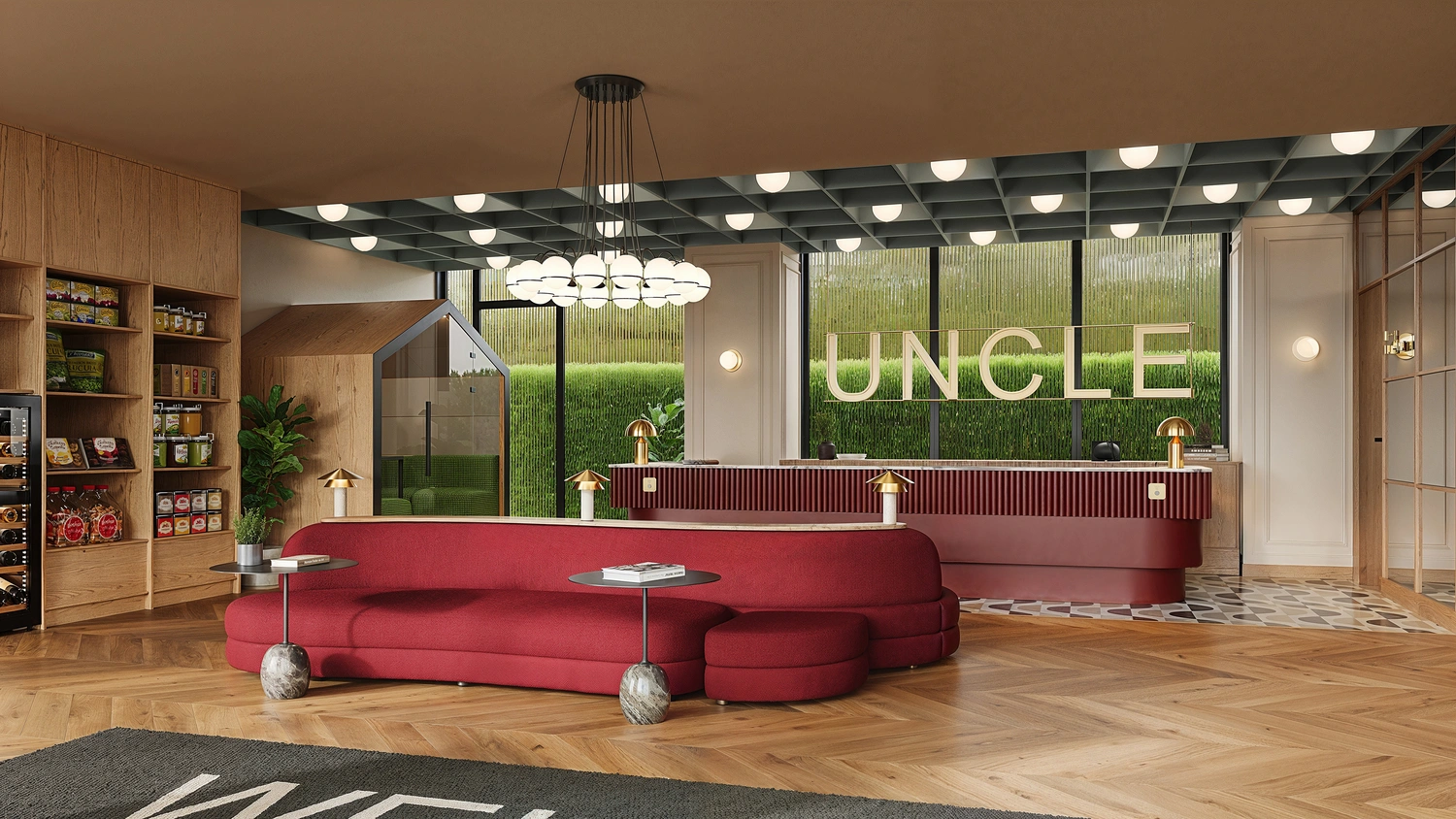
What Is Commercial Interior Design Rendering?
Commercial interior rendering creates realistic 3D images of spaces designed for business or public use. Professional 3D interior visualization can show an office, hotel, restaurant, retail store, showroom, reception area, corporate space, or healthcare facility before construction or renovation begins.
Unlike residential projects, commercial and residential interior design often serve different decision-makers. A commercial render may need to communicate the concept to developers, investors, tenants, or business owners simultaneously.
These visuals support:
- Marketing and advertising
- Investor presentations
- Leasing
- Client approvals
- Brand presentations
- Pre-construction planning
For businesses, rendering is therefore more than a design preview. It becomes a practical asset for communication and marketing.
What Is Residential Interior Design Rendering?
Residential rendering focuses on private living environments and the way people will experience them. Residential CGI can visualize apartments, houses, villas, condominiums, kitchens, bedrooms, living rooms, bathrooms, and luxury residences.
In residential and commercial interior design, the residential side usually places greater emphasis on comfort, personal taste, atmosphere, and lifestyle. A homeowner may want to compare two kitchen finishes, while a developer may need realistic apartment images before the property exists.
Common applications include:
- Design presentations
- Client approvals
- Material and furniture selection
- Design development
- Property marketing
- Pre-sales
The goal is to make an unfinished idea understandable enough for clients or buyers to make confident decisions.
Commercial vs Residential Interior Design Rendering: Key Differences
The difference between residential and commercial interior design rendering is not simply that one shows homes and the other shows businesses. Purpose, scale, audience, branding, and production requirements can all change.

Purpose of the Rendering
Commercial CGI communicates business concepts, brand identity, customer experience, and investment potential. Commercial building renderings may support leasing, approvals, investor presentations, or marketing before construction is complete.
Residential CGI focuses on the look, comfort, and function of a private space. In residential vs commercial interior design, the residential client is more likely to ask, “Would I want to live here?” rather than whether the environment supports a business model.
Scale and Number of Spaces
A residential assignment might involve one room or an apartment. A commercial project can include several floors, public areas, repeated rooms, and functional zones.
In interior design residential vs commercial, a hotel may require a lobby, restaurant, guest rooms, corridors, and leisure areas to share one visual language. Larger scale increases rendering volume and makes consistency more important.
Level of Detail
Both project types require realistic furniture, materials, textures, fixtures, and architectural elements. Commercial projects often add reception desks, retail displays, signage, branded installations, and custom furniture.
This is an important difference between residential and commercial interior design visualization: inaccurate custom elements can misrepresent the business concept, so they must match project specifications.
Lighting and Atmosphere
Residential lighting often communicates comfort, privacy, and lifestyle. Commercial lighting may establish a brand atmosphere, guide customers, support productivity, or create a hospitality experience.
A restaurant may need intimate evening lighting, while an office requires balanced illumination for productive workspaces. Lighting, therefore, plays different roles in commercial vs residential interior design.

Materials and Finishes
Both approaches need believable flooring, wall finishes, upholstery, wood, stone, metal, glass, and decorative surfaces.
The priorities in commercial vs residential interior design can differ. Commercial spaces may emphasize durability and brand consistency, while residential projects often prioritize personalization and atmosphere. Understanding render resolution also helps teams choose suitable output quality.
Furniture and Custom Elements
Residential furniture helps communicate lifestyle and personal style. Commercial projects may require reception desks, retail displays, restaurant or hotel furniture, office systems, and branded installations.
Accurate custom modeling is especially important when generic assets cannot represent the specified design. The distinction between 3D rendering and modeling also matters: modeling creates the geometry, while rendering creates the final image.
Branding and Visual Identity
Branding is one of the clearest differences in residential vs commercial interior design. Commercial CGI may reproduce logos, corporate colors, signage, branded furniture, materials, and other customer touchpoints.
Residential visualization is generally centered on the homeowner’s or designer’s personal style rather than corporate identity.
.webp)
Audience and Presentation Requirements
Commercial renders may address investors, developers, business owners, tenants, customers, architects, and designers. Residential audiences include homeowners, buyers, developers, designers, and real estate clients.
The intended viewer affects what the image needs to communicate, from business potential and functionality to lifestyle and comfort.
Rendering Volume and Consistency
Commercial projects can require multiple camera angles, rooms, design options, and catalog-scale production. Materials and lighting must remain consistent across the complete image set.
Residential projects can also require several visuals, but production volume is often smaller. A hotel rendering campaign, for example, may cover many room types and marketing channels.
Marketing and Sales Applications
Both residential and commercial interior design use CGI for sales, but the objectives differ. Commercial visuals support leasing, hospitality marketing, retail launches, advertising, investor materials, and development campaigns.
Residential visuals support property listings, pre-sales, design presentations, and client approvals. Property rendering can also help buyers understand an unfinished development before physical photography is possible.
Residential vs Commercial Interior Design Rendering: Comparison Table
While commercial and residential interior design projects use similar visualization tools, their priorities differ significantly. Commercial CGI responds to business goals, larger project scales, and broader audiences, while residential visualization focuses more closely on individual living needs.
The table illustrates why commercial and residential interior design should not use the same visualization strategy. The technical process may be similar, but the business objective behind each image changes what artists need to emphasize.
Residential vs Commercial Interior Design Rendering: Which Requires More Detail?
Neither project type is automatically more complex. The workload in residential vs commercial interior CGI depends on several factors:
- Number of spaces: More rooms and functional zones increase production volume.
- Architectural detail: Complex structures require more precise modeling.
- Furniture complexity: Bespoke pieces take longer to recreate than standard assets.
- Custom modeling: Branded or unique elements require additional production work.
- Material requirements: Detailed textures and reflective surfaces demand greater accuracy.
- Lighting: Complex lighting scenarios require more setup and testing.
- Number of views: More camera angles increase rendering and refinement work.
- Required realism: Photorealistic results demand greater attention to materials, lighting, and details.
- Revision volume: Multiple design changes and stakeholder comments increase production time.
Commercial projects often involve more spaces and branded elements, while a detailed luxury residence can be equally demanding.
How 3D Rendering Supports Commercial Interior Design
For residential and commercial interior design, project goals shape how CGI is used. In commercial projects, CGI solves a practical timing problem: marketing, leasing, and investor discussions often begin before a space is built or ready to photograph. Its business value includes:
- Visualizing concepts before construction: Teams can review the planned space before physical work begins.
- Presenting projects to investors: Realistic visuals make design concepts easier to understand and evaluate.
- Supporting leasing and pre-sales: Marketing can begin while the property is still under development.
- Creating marketing imagery: CGI provides visuals for campaigns, presentations, websites, and advertising.
- Communicating brand concepts: Materials, lighting, furniture, colors, and signage can show the intended brand experience.
- Reducing approval misunderstandings: Stakeholders can review a clear visual instead of relying only on drawings.
The discussion around AI and 3D artists is also relevant: AI can speed exploration, while artists retain control over accuracy, brand details, and final quality.
How 3D Rendering Supports Residential Interior Design
In commercial vs residential interior design, residential visualization gives clients a realistic preview of a future home before construction or renovation begins. Its main benefits include:
- Showing the finished design: Clients can understand how the completed interior will look and feel before construction starts.
- Comparing materials and furniture: Different finishes, colors, furniture, and layouts can be evaluated before purchases are made.
- Presenting design options: Designers can show alternative concepts without physically changing the space.
- Helping clients make decisions: Clear visuals make it easier to approve layouts, materials, and design details.
- Supporting property marketing: Developers can promote and pre-sell homes before they are completed.
- Communicating the designer’s vision: CGI shows how furniture, materials, lighting, and décor work together as one concept.
In interior design residential vs commercial, both approaches turn plans into clearer decisions, but residential CGI places greater emphasis on comfort, personality, and lifestyle.

How PIXREADY Approaches Commercial and Residential Interior Design Rendering
PIXREADY adapts CGI production to interior design residential vs commercial needs, from a single residential hero image to coordinated visuals for large commercial spaces. The workflow can include:
- Photorealistic rendering: Realistic interiors communicate the final design clearly.
- Accurate materials and textures: Surfaces reflect the specified finishes and design intent.
- Custom 3D modeling: Bespoke furniture and architectural elements are modeled when standard assets are unsuitable.
- Lighting and environment setup: Lighting supports the intended mood, function, and atmosphere.
- Multiple design variations: Clients can compare materials, furniture, layouts, or finishes before approval.
- Consistent visuals: Shared art direction keeps multiple spaces visually connected.
- Marketing-ready CGI: For commercial and residential interior design, visuals can support presentations, advertising, property listings, and sales campaigns.
- High-volume production: Scalable workflows help larger projects create multiple images efficiently and consistently.
Understanding interior rendering cost also helps teams plan image volume and production scope.
Residential Case: Rockhold Residence
For Rockhold Residence, PIXREADY partnered with Kimmel Studio Architects to visualize a contemporary waterfront home on Chesapeake Bay. Working from a SketchUp model, design brief, and references, the team created eight photorealistic interior renderings and one flythrough animation. Multiple CGI artists, supported by a senior visualization mentor and AI-assisted material refinement, maintained consistency despite a compressed schedule.
The project shows how commercial and residential interior design visualization can require precise materials, lighting, and architectural details. The visuals captured exposed concrete, steel framing, warm timber, expansive glazing, natural light, and waterfront views, helping communicate the residence’s atmosphere and connection to the surrounding landscape before construction began.
Commercial Case: Resort Hotel in Egypt
For a resort hotel in Egypt, PIXREADY helped Kadia Halstead Design transform interior ideas into photorealistic 3D visuals. The team explored different color palettes, materials, and lighting scenarios, presenting spaces from the spacious lobby to bohemian-chic guest suites. This residential vs commercial interior design distinction is especially important in hospitality, where visuals must communicate both design quality and guest experience.
The renderings helped the design team evaluate options, incorporate client feedback, and refine details before construction. They also supported investor presentations and marketing by giving stakeholders and potential guests a clear, realistic view of the future hotel.
Conclusion
The main difference between residential and commercial interior design rendering lies in purpose. Residential CGI emphasizes lifestyle, comfort, and personal choices, while commercial CGI often adds branding, scale, customer experience, and business communication.
Neither approach is automatically more difficult; the project scope determines the workload. Professional rendering gives both teams a clearer way to make decisions, gain approvals, and market spaces before they exist. Start building your visualization strategy before construction begins.
Get 3d expert on your side
More than a 3D rendering vendor, PIXREADY acts as a strategic CGI partner helping brands
сreate scalable visual content for marketing, sales, and product launches. Let's explore your
project and discuss how CGI can support your business goals!
.png)
Founded by a group of technology, architecture, and design professionals in 2018, PIXREADY is one of the challengers empowering the 3D visualization industry and making its products and services more affordable.We are determined to assist businesses around the world to create photorealistic images of their products and ideas and enrich the experience of their clients. We focus on the details, with the highest precision in every pixel.