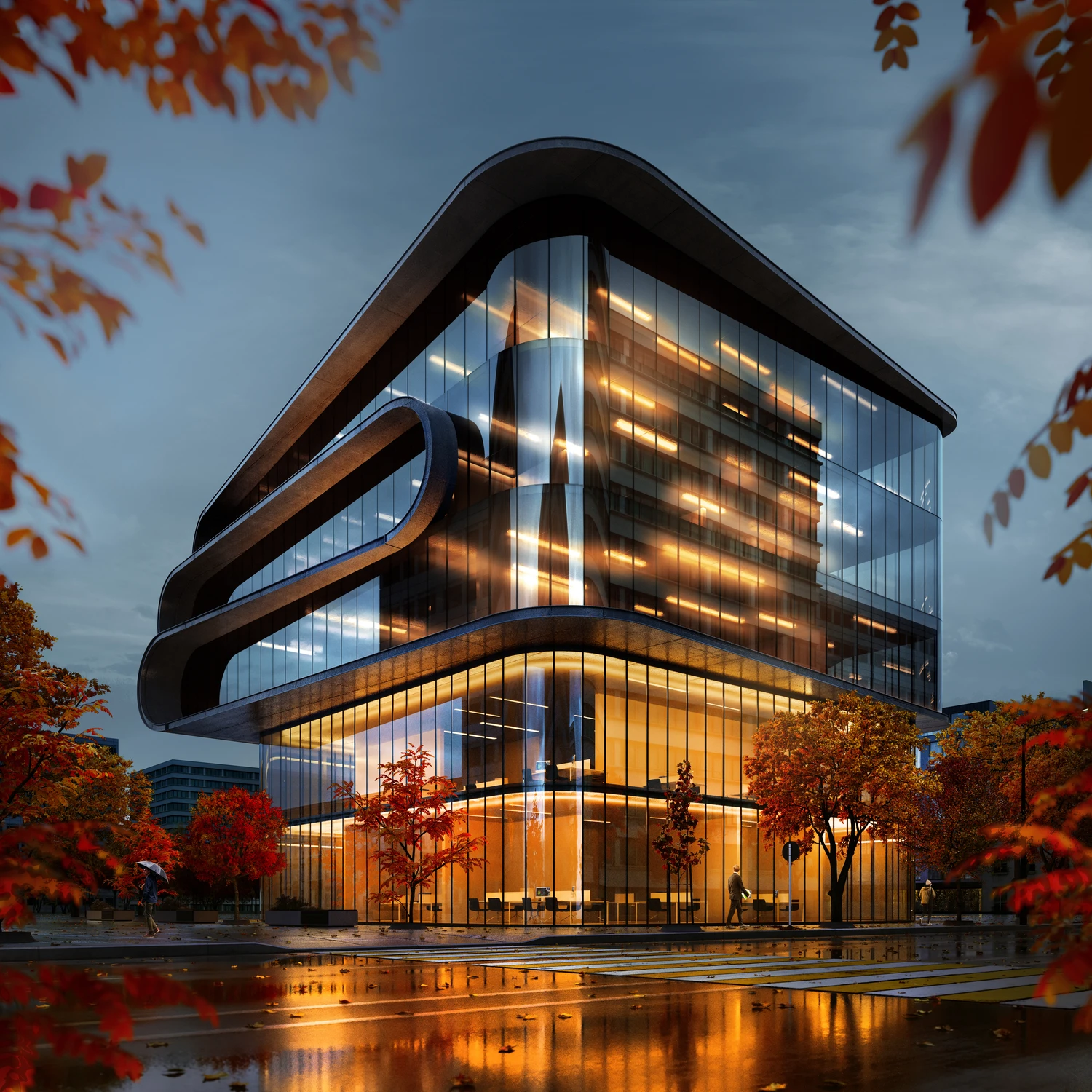
AI Rendering Enhancer vs Professional Rendering Studio: Which Delivers Better Results?
Explore when an AI rendering enhancer can speed up visual production and when professional CGI expertise is still essential for accurate, consistent, and reusable results.

An AI render enhancer can improve an image in seconds, making AI tools attractive to brands, designers, and architects working under tight deadlines. Yet speed alone does not guarantee technical accuracy, brand consistency, or reusable 3D assets.
As more businesses evaluate whether AI can replace professional CGI, this guide provides a balanced comparison between AI rendering generators and traditional 3D rendering, explaining why many achieve the strongest results by combining both approaches.
What Is an AI Rendering Enhancer?
An AI 3D render enhancer is software that uses artificial intelligence to improve or transform existing images. Instead of creating a scene manually in 3D, it analyzes the uploaded image. It applies automated changes such as sharpening details, reducing noise, improving lighting, increasing resolution, or generating new visual elements based on user instructions.
The typical workflow is straightforward. Users upload an image, choose enhancement settings or enter a text prompt, let the AI process the file, review the result, and export the final version. This simplicity has made AI tools accessible to professionals without advanced 3D skills.
.webp)
Not every AI render enhancer performs the same task. Some focus on image upscaling, while others specialize in denoising, relighting, image-to-image transformation, or generating new visuals from prompts. These capabilities differ from full 3D rendering generation, where artists build geometry, materials, lighting, and cameras inside dedicated CGI software.
Today, rendering enhancer AI is widely used for concept ideation, mood boards, design exploration, client presentations, quick drafts, marketing mockups, and social media content. Many platforms combine several of these features, allowing users to test ideas much faster than traditional workflows.
Their growing popularity comes from three key advantages: speed, accessibility, and lower costs for early-stage visualization. They also help creative teams explore multiple ideas before selecting a final design.
However, businesses that need technically accurate, photorealistic, production-ready visuals still rely on professional rendering studios. Render enhancer AI is best viewed as a tool that accelerates creative workflows rather than replacing professional CGI expertise.

Top AI Rendering Enhancers in 2026
The AI visualization market continues to expand, giving businesses access to a wide range of tools, from a 3D render AI enhancer to specialized rendering and post-processing solutions for different creative and commercial needs. Some focus on architectural visualization, while others specialize in image enhancement using AI rendering tools, photorealistic rendering, or post-processing.
- Magnific AI
- Chaos AI Enhancer
- D5 Render AI Enhancer
- ArchiVinci
- mnml.ai
- MyArchitectAI
- Topaz Photo AI
- Adobe Firefly
The following table compares the main features, pricing, and strengths of the leading AI rendering enhancers discussed above.
Comparison of Leading AI Rendering Enhancers in 2026:
*Availability depends on the Chaos product and subscription plan.
Magnific AI
Magnific AI is a popular AI 3D render enhancer that improves uploaded images by increasing resolution, sharpening textures, refining lighting, and adding detail. It is useful for architectural, interior, product, and marketing visuals that need greater realism without rebuilding the scene in 3D.
Advantages
- Excellent image upscaling
- Strong texture enhancement
- Easy to use
- Fast processing
Limitations
- Does not generate editable 3D models
- May invent details that differ from the original design
- Limited control over exact geometry
Chaos AI Enhancer
Chaos AI Enhancer is an AI render image enhancer that improves rendered images within existing Chaos workflows. It integrates seamlessly with Chaos products, helping architectural visualization teams enhance image quality without replacing professional rendering software.
Advantages
- Works within professional rendering workflows
- Improves image quality quickly
- Preserves much of the original render
Limitations
- Designed primarily for existing Chaos users
- Still depends on professionally created 3D scenes
- Not intended as a complete rendering solution
D5 Render AI Enhancer
D5 Render is a render AI enhancer that combines real-time rendering with AI-powered tools to improve lighting, skies, vegetation, and overall image quality. Its real-time workflow lets architects and designers instantly preview changes, making it ideal for client presentations and design reviews.
Advantages
- Fast real-time visualization
- Built-in AI enhancement tools
- User-friendly interface
- Suitable for architectural presentations
Limitations
- Best performance requires powerful hardware
- Complex scenes may still require optimization
- AI features focus on enhancement rather than full content generation

ArchiVinci
ArchiVinci is one of the best AI render enhancer tools for interior designers and architects, transforming sketches, floor plans, and simple 3D models into concept visuals within minutes. It is especially useful during the early design stage for comparing different styles, materials, and layouts.
Advantages
- Designed for architectural workflows
- Generates multiple design concepts quickly
- Easy for non-CGI specialists
- Useful for early client presentations
Limitations
- Limited control over precise architectural details
- Results may require manual editing
- Not intended for final production imagery
mnml.ai
mnml.ai is a 3D rendering AI enhancer that helps architects and interior designers quickly turn sketches, elevations, and renderings into multiple design concepts. It is ideal for brainstorming, mood boards, and early presentations where speed is more important than technical precision.
Advantages
- Rapid concept exploration
- Multiple architectural styles
- Simple browser-based workflow
- Good for design inspiration
Limitations
- Geometry may change unexpectedly
- Results vary depending on prompts
- Limited suitability for production-ready marketing visuals
MyArchitectAI
MyArchitectAI is an AI 3D rendering enhancer for architectural visualization and real estate marketing. It quickly generates exterior and interior visuals from plans, sketches, or unfinished renderings, helping developers create presentation-ready concepts before investing in full CGI production.
Advantages
- Fast image generation
- Suitable for real estate marketing
- Easy-to-use interface
- Good for concept presentations
Limitations
- Limited editing flexibility
- Less control over materials and geometry
- Images often require professional review before commercial use
.webp)
Topaz Photo AI
Topaz Photo AI is considered one of the best AI rendering enhancer tools for improving image quality. It removes noise, sharpens details, increases resolution, and prepares rendered images for websites, brochures, print, and digital advertising.
Advantages
- Excellent noise reduction
- High-quality sharpening
- Reliable image upscaling
- Simple workflow
Limitations
- Does not generate new renderings
- Cannot edit geometry or materials
- Functions only as a post-processing tool
Adobe Firefly
Adobe Firefly is a top AI rendering enhancer within Adobe Creative Cloud, allowing designers to generate objects, expand images, and replace backgrounds. It is widely used to create marketing graphics, campaign variations, and social media content from existing visuals.
Advantages
- Seamless Adobe integration
- Strong generative editing features
- Commercial-friendly workflow
- Useful for marketing content
Limitations
- Not designed for precise 3D visualization
- Limited control over engineering accuracy
- Best used alongside professional CGI rather than instead of it
These platforms show how rapidly AI render enhancer technology is evolving, with each tool specializing in image enhancement, concept generation, or creative editing. However, professional CGI remains essential for projects requiring accurate geometry, reusable 3D assets, and consistent commercial-quality results.

What Are the Disadvantages of AI Rendering Enhancers?
AI rendering enhancers can significantly accelerate creative workflows and improve image quality, but businesses should understand their limitations before relying on them for commercial or production-ready visualization.
- Limited geometry accuracy
- Inconsistent materials and textures
- Limited control over final results
- Consistency across large projects
- Lack of editable 3D assets
- Commercial and legal considerations
- Human review is still essential
Limited Geometry Accuracy
A rendering enhancer AI can improve visuals but may alter proportions or introduce unrealistic details. While acceptable for concept development, it is unsuitable for engineering reviews, manufacturing approvals, or technical presentations that require exact dimensions.
Inconsistent Materials and Textures
Many AI tools struggle to reproduce PBR materials consistently. Colors, reflections, finishes, fabrics, metals, and branded surfaces may vary between outputs, making it difficult to maintain a consistent visual identity. Even a render enhancer AI may produce different results from similar inputs.
Limited Control and Project Consistency
AI-generated images depend heavily on prompts and automated interpretation, so achieving a specific creative vision often requires multiple iterations. Although a 3D render AI enhancer can quickly create attractive visuals, maintaining identical lighting, camera angles, materials, and product appearance across large catalogs, furniture collections, or architectural developments remains difficult.
Lack of Editable Assets and Commercial Considerations
Most AI enhancers create only 2D images rather than reusable 3D assets. Businesses should review licensing and commercial usage rights before uploading confidential designs. Even with an AI 3D render enhancer, professional quality control is essential before publishing commercial images.
Where Professional Rendering Studios Deliver Greater Value
An AI render enhancer can accelerate concept development, but professional rendering studios deliver greater value for projects requiring accuracy, consistency, and long-term business use. They create precise 3D assets rather than simply improving existing images, making them essential for product launches, furniture collections, manufacturing visualization, architectural marketing, and real estate developments.
Studios build accurate models that can be reused for product configurators, animation, 360 rendering, AR/VR experiences, interactive presentations, and future marketing campaigns. Unlike a rendering enhancer AI, professional CGI ensures consistent geometry, materials, lighting, and branding across large commercial projects, even when hundreds of visuals are required.
Professional artists also collaborate with designers, engineers, architects, and marketing teams to refine every detail and meet technical and commercial requirements. This structured workflow supports multiple revisions, stakeholder approvals, and reliable quality control throughout the project. While a render enhancer AI is valuable for rapid experimentation, professional studios provide reusable digital assets, scalable production, and consistent visual quality that support long-term visualization strategies and deliver greater commercial value.
AI Render Enhancer vs Hiring a 3D Rendering Company
Both AI rendering enhancers and professional rendering companies help businesses create compelling visuals, but they serve different purposes. AI excels at rapid experimentation and early-stage concept development, while professional CGI studios focus on accuracy, consistency, and high-quality commercial production.
There is no universal winner because the best choice depends on the project's goals.
If the objective is to visualize ideas quickly, compare design directions, or prepare internal presentations, an AI render image enhancer can significantly reduce time and cost. However, projects requiring photorealistic quality, technical precision, consistent branding, or reusable assets benefit far more from a professional 3D rendering company.
For many businesses, the best strategy combines both approaches: AI speeds concept exploration, while a render AI enhancer supports early creative workflows before professional CGI artists transform selected concepts into accurate, production-ready visuals for commercial use.
Why Choose PIXREADY Instead of AI 3D Render Enhancer
At PIXREADY, we combine the efficiency of the best AI render enhancer with professional CGI expertise to deliver accurate, scalable, and production-ready visualizations for commercial projects.
- Expert-led AI-assisted 3D workflows for faster production
- Expertise in product, architectural, and marketing visualization
- Photorealistic rendering supported by human quality control
- Award-winning team of 3D artists and visualization specialists
- Accurate geometry, materials, lighting, and camera settings
- Scalable production for projects of any size, from single visuals to large commercial campaigns
- Reusable 3D assets for animation, product configurators, AR/VR, interactive presentations, and future marketing
- Transparent collaboration with structured revision and approval workflows
- End-to-end support from concept development to final delivery
- Consistent branding and visual quality across product catalogs and marketing campaigns
- Hybrid production workflow that combines AI efficiency with professional artistic expertise for accurate, production-ready commercial visualization
Case Study: Bronte Residential & Commercial Complex
One example is the Bronte visualization project, where PIXREADY created photorealistic visuals for a residential and commercial complex before construction began. Instead of relying on an AI rendering enhancer, our team combined professionally built 3D models with AI-assisted workflows to refine lighting, vegetation, and overall visual realism while maintaining full control over architectural accuracy.
The final delivery included 25 high-resolution exterior renderings used for pre-sales, investor presentations, on-site banners, and digital marketing. The project demonstrates how professional CGI and carefully applied AI together deliver consistent architectural visualization that supports sales, investment promotion, and large-scale development projects.

Conclusion
AI render enhancer tools are excellent for accelerating concept development and improving early-stage visuals, but they cannot fully replace 3D artists for commercial production.
Businesses that need photorealistic quality, technical accuracy, reusable 3D assets, and consistent branding achieve better long-term results by investing in experienced rendering studios. Combining AI with professional expertise delivers the most reliable, scalable, and future-ready visualization workflow.
Get 3d expert on your side
More than a 3D rendering vendor, PIXREADY acts as a strategic CGI partner helping brands
сreate scalable visual content for marketing, sales, and product launches. Let's explore your
project and discuss how CGI can support your business goals!
.png)
Founded by a group of technology, architecture, and design professionals in 2018, PIXREADY is one of the challengers empowering the 3D visualization industry and making its products and services more affordable.We are determined to assist businesses around the world to create photorealistic images of their products and ideas and enrich the experience of their clients. We focus on the details, with the highest precision in every pixel.
FAQ
What is an AI rendering enhancer?
An AI rendering enhancer uses artificial intelligence to improve rendered images by enhancing lighting, textures, resolution, and overall visual quality without rebuilding the original 3D scene.
Can AI create photorealistic product renderings?
Yes, AI can generate impressive product visuals, but commercial projects often require professional artists to ensure accuracy, realistic materials, consistent branding, and production-ready quality.
Can AI produce consistent results across large product catalogs?
AI may struggle to maintain consistent materials, lighting, geometry, and branding across large catalogs, making professional CGI workflows more reliable for commercial production.
Why do businesses still hire professional rendering studios?
Professional studios provide technical accuracy, reusable 3D assets, structured revisions, and consistent visual quality, helping businesses create scalable marketing content for long-term commercial use.
Can AI rendering enhancers create reusable 3D models?
Most AI 3D rendering enhancers generate images rather than editable 3D models, limiting future reuse for animations, configurators, product updates, augmented reality, and interactive applications.
Is AI rendering accurate enough for manufacturing?
AI is useful for visualization, but manufacturing projects often require precise dimensions, geometry, materials, and engineering accuracy that professional CGI workflows can reliably deliver.
Can AI rendering enhancers create animations?
Some AI tools support basic animation features, but complex commercial animations usually require professionally built 3D models, advanced software, and experienced CGI artists.
How does PIXREADY combine AI with professional CGI?
PIXREADY integrates AI into its workflow to accelerate concept development while experienced CGI artists refine projects into accurate, photorealistic, production-ready visuals for commercial clients.