AI Interior Rendering vs Traditional Rendering: Which One Should You Choose in 2026?
AI Interior Rendering vs Traditional Rendering: Which One Should You Choose in 2026?
Discover how AI interior rendering helps speed up visualization workflows and when professional rendering delivers more accurate and reliable results for real projects.
In 2026, AI rendering for interior design is transforming how designers and businesses create visuals across multiple industries. Many professionals now ask whether AI tools can replace traditional interior rendering or if expert workflows still matter in real projects.
This article explains how AI-generated interior visuals work, where they help, and when traditional rendering delivers better, more reliable results for complex projects.
What Is AI Interior Design Rendering?
Interior rendering AI is a process where software generates interior images using artificial intelligence. Instead of building scenes manually, users enter text prompts or upload references, and the system generates visuals quickly and efficiently.
This technology uses large datasets and generative models. These models learn patterns from thousands of interior images and recreate similar scenes. Diffusion-based systems refine images step by step, producing detailed, visually appealing results.
One key advantage is accessibility. Even users without design skills can create visuals in minutes, making AI tools useful for early concepts and quick ideas in different design scenarios.
At the same time, AI interior design rendering continues to grow in importance. Designers use it to explore styles, test layouts, and present ideas faster than before across multiple projects.
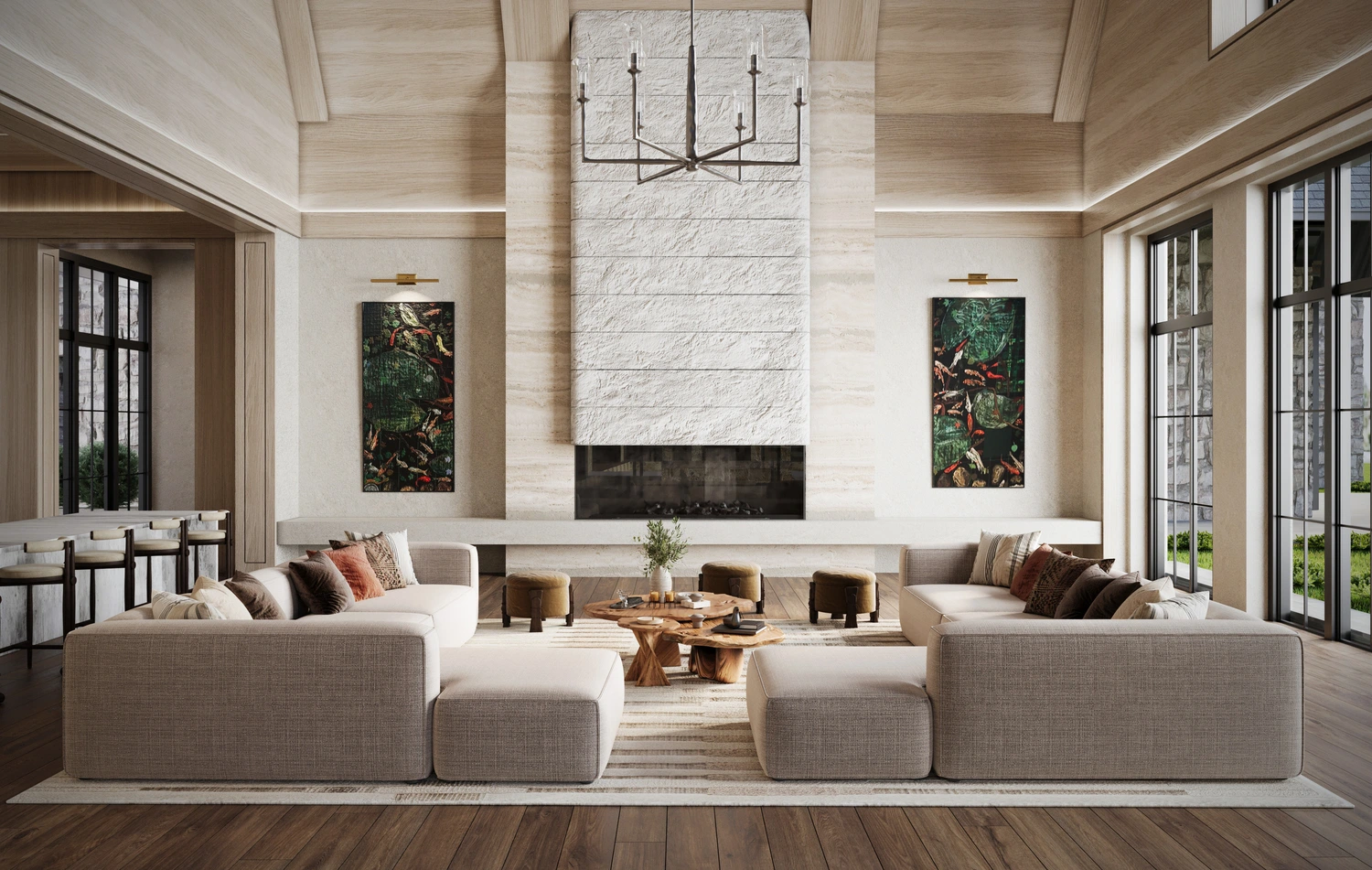
Photorealistic Interior Rendering for the Living Room by PIXREADY
Advantages of AI for Interior Design Rendering
AI tools offer several practical advantages that help designers and businesses work faster and more efficiently.
Fast turnaround AI generates interior visuals in seconds or minutes. This speed lets teams move quickly from idea to visual concept without long production times. It is especially useful in early project stages where teams explore multiple directions.
Cost-efficient visualization AI reduces the need for complex modeling and rendering workflows. Businesses can create visuals without large production budgets, making it easier to test ideas before investing in full-scale design.
No need for great technical skills Users do not need advanced knowledge of 3D software, as AI rendering for interior design allows them to generate visuals using simple prompts or reference images, making the process accessible to a wider audience.
Rapid iteration and experimentation Designers can quickly test different layouts, styles, and color schemes, helping identify strong concepts more quickly and enhancing creative flexibility.
Scalable content production AI enables teams to quickly produce a large number of visuals, supporting marketing campaigns, presentations, and digital content across multiple platforms.
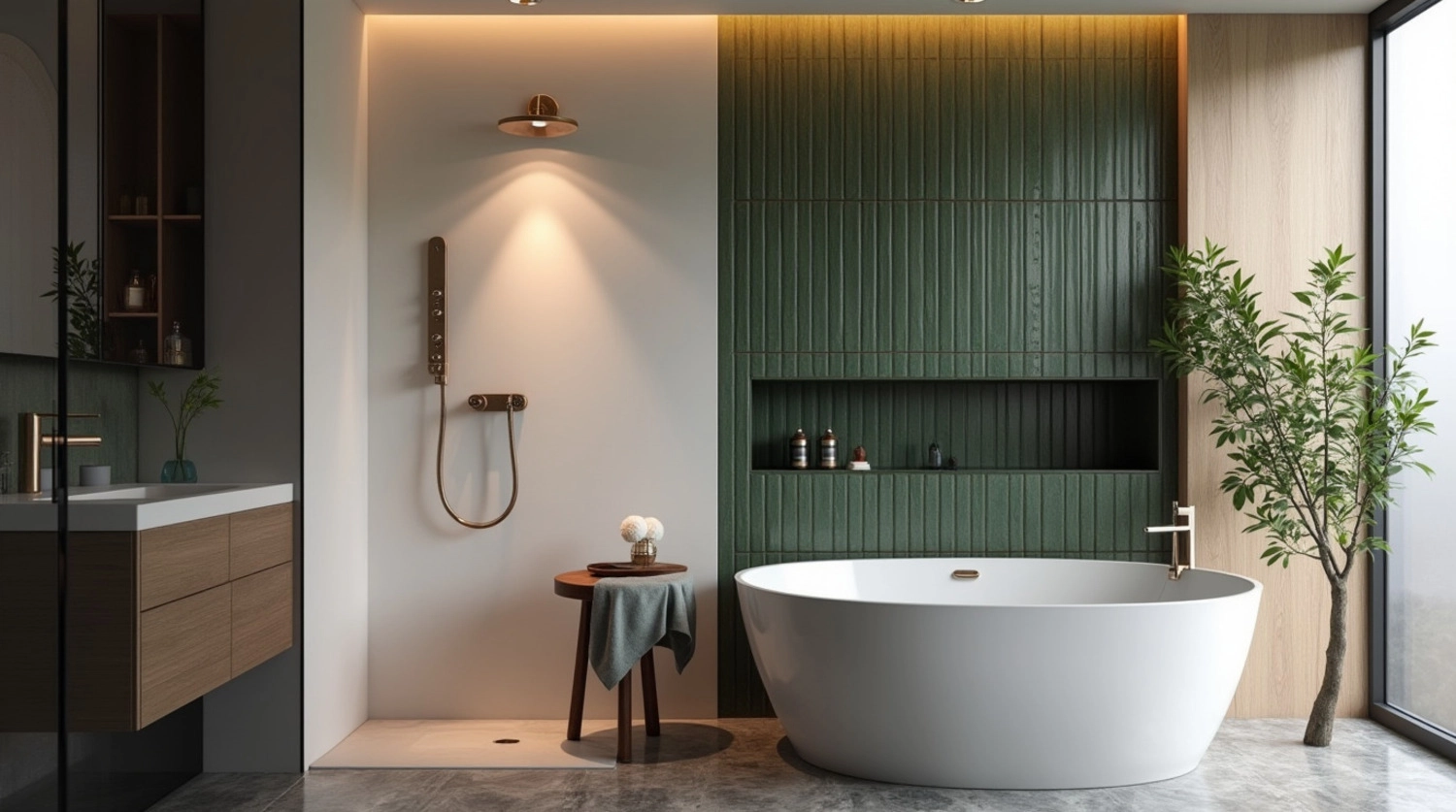
The Bathroom Interior Rendering AI by PIXREADY
Limitations of AI for Interior Rendering
Despite its advantages, the best AI rendering for interior design has several limitations that affect its use in real-world projects.
Lack of dimensional accuracy AI-generated visuals often do not adhere to exact measurements, making it difficult to rely on them for layouts that require precise proportions or spatial planning.
Limited control over details Designers cannot fully control materials, lighting, or object placement. Small changes in prompts may not produce predictable results.
Inconsistent outputs AI can generate different results from similar inputs, making it hard to maintain a consistent visual style across multiple images or projects.
Difficulty matching real-world products AI struggles to replicate specific furniture models, finishes, or branded items, which limits its use in commercial presentations.
Not suitable for technical documentation AI visuals cannot replace professional drawings or construction-ready models. They lack the accuracy required for implementation and approval processes.
Top AI Interior Rendering Tools in 2026
The market for interior design AI rendering tools continues to grow rapidly. In 2026, several platforms stand out for their capabilities, ease of use, and impact on design workflows.
Midjourney – Best for Artistic Visuals Midjourney is known for its strong visual style and creative output. It produces highly detailed, atmospheric interiors that work well for mood boards and concept presentations, such as hotel projects for investors. Designers often use it to explore ideas and generate inspiration, though it may lack the precision needed for technical projects.
DALL·E – Good for Creative Exploration DALL·E allows users to generate interior visuals from simple text prompts using AI 3D rendering interior design capabilities. It is effective for testing different layouts, styles, and color combinations, supporting fast experimentation and helping designers quickly visualize multiple design directions. For example, when choosing a new style for a restaurant or hotel.
ChatGPT (with image capabilities) – Best for Structured Ideation ChatGPT combines language and image generation to support structured workflows. Designers can build clear prompts, refine concepts, and generate consistent visuals. It is especially useful for organizing ideas and creating logical design variations.
Gemini – Best for Integrated AI Workflows Gemini offers a more connected ecosystem by combining multiple AI functions and supporting AI for interior design rendering workflows. It integrates text, images, and processes, making it easier to manage projects in one place and useful for teams that need efficiency and scalability.
Nanabanana – Emerging Tool for Fast Visual Generation Nanabanana focuses on speed and simplicity. It enables users to generate interior visuals quickly, making it suitable for early-stage concepts and rapid content creation. Although still developing, it shows strong potential for future workflows.
These tools demonstrate how AI for interior rendering continues to reshape interior visualization and creative processes.
Comparison of AI Rendering and Bathroom Concepts Made in Midjourney by PIXREADY
AI’s Role in Interior Projects
AI has become a valuable part of modern interior design workflows. It allows teams to work more efficiently, generate ideas faster, and improve how concepts are shared across projects.
Concept Development & Ideation Designers use tools such as Midjourney and DALL·E to create visual concepts in a short time. • Produce multiple layout, style, and color variations within minutes • Replace time-consuming sketching and manual mood boards • Expand creative exploration without technical limitations
Client Communication & Visualization AI for rendering interior design improves how ideas are presented to clients without technical backgrounds. • Turn abstract concepts into clear visual representations • Help clients better understand spatial and design decisions early • Speed up feedback and support faster approvals
Style Exploration & Personalization AI makes it easy to experiment with different visual directions. • Adapt interiors to styles such as minimalist, Scandinavian, or industrial • Customize visuals based on client preferences • Present several design options simultaneously
Rapid Prototyping for Interior Concepts AI interior visualization helps test ideas quickly before detailed production. • Experiment with furniture placement and lighting setups • Explore materials and spatial compositions efficiently • Minimize expensive changes during later stages
Marketing & Content Creation AI supports fast creation of visual content for different platforms. • Develop images for websites, presentations, and social media • Assist real estate promotion at early project stages • Generate large volumes of visuals with minimal effort
Limitations in Real Projects Despite its advantages, AI still has practical constraints. • Does not ensure precise measurements or spatial accuracy • Cannot fully guarantee real-world feasibility • Requires further refinement using professional tools such as 3ds Max or Blender
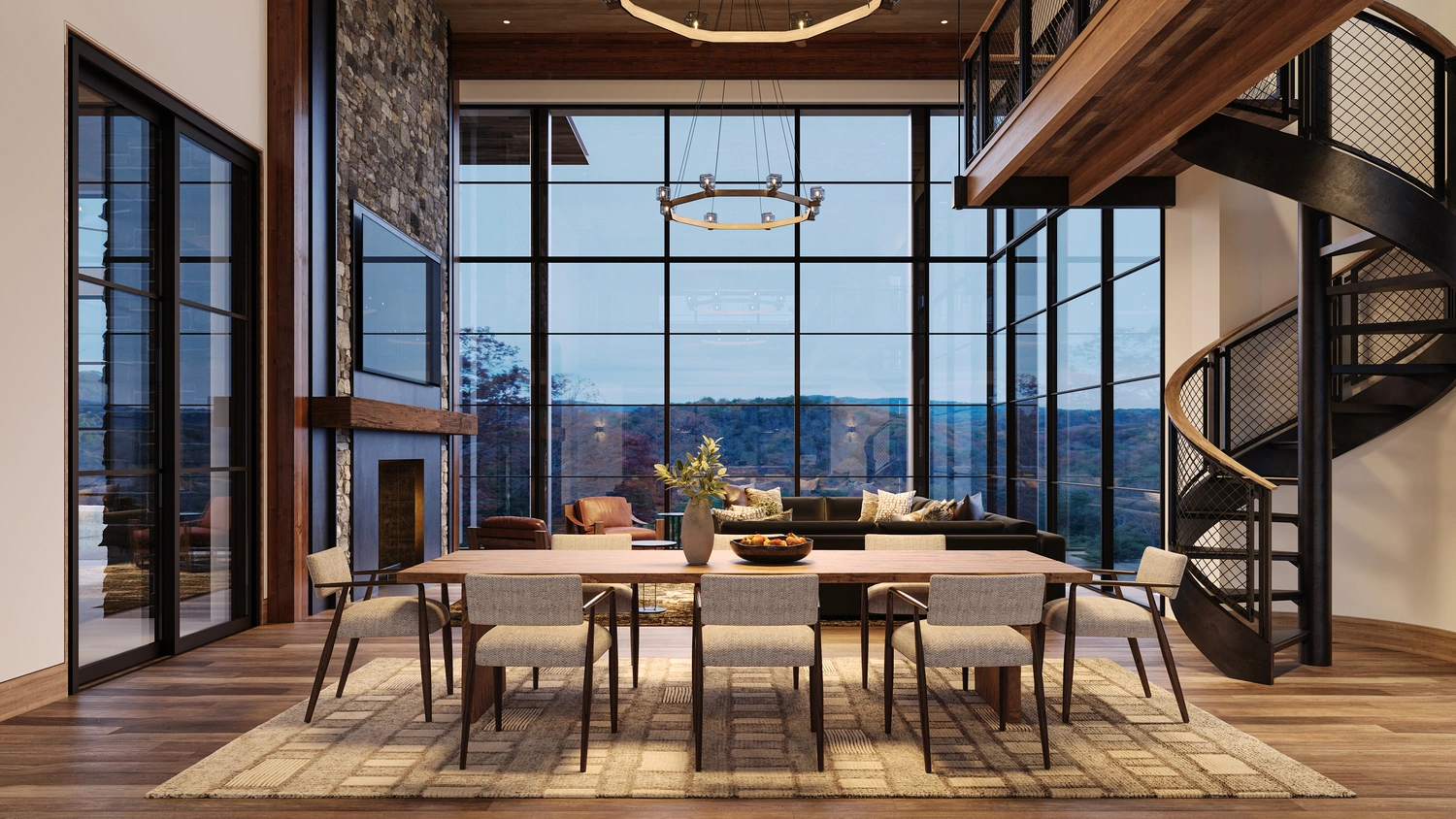
Realistic Rendering for Interior Design of the Two-Story Living Room by PIXREADY
Traditional vs AI Interior Visualization: A Comparison
While AI tools are fast, traditional rendering ensures professional quality and reliability.
Photorealistic Quality That DrivesDecisions Traditional rendering delivers highly realistic images with accurate lighting, shadows, and materials, going beyond AI interior rendering. • Tools like V-Ray and Corona recreate real lighting and material behavior • Images closely reflect how the final space will appear after completion • High-quality visuals build trust and help speed up client approvals
Precision and Real-World Accuracy Designers build every element to scale using software such as Autodesk 3D Max. • Precise measurements confirm that the design can be built in real conditions • Layouts and material choices accurately represent real-life environments • Essential for architecture, interior design, and property development
• Full Creative and Technical Control Designers manage every detail of the scene. • Camera angles, lighting, and materials can be adjusted precisely • Results are predictable and consistent • Outputs remain consistent and do not rely on unpredictable AI variations
Consistency Across Projects Traditional workflows maintain a unified visual style. • Essential for branding and marketing campaigns • Important for large-scale developments with multiple visuals • Ensures all images align with the project identity
Accurate Representation of Real Products Designers can use exact furniture models and finishes. • Ideal for product visualization and catalogs • Helps present real materials and textures • Supports clear and realistic interior presentations
Client-Ready, Commercial-Grade Visuals Traditional renders meet professional standards. • Suitable for investor pitches and sales presentations • Used in real estate listings and marketing materials • Support high-stakes business decisions
Flexible and Precise Revisions Teams can make controlled changes at any stage. • Adjust lighting, swap materials, or modify layouts • No need to regenerate results from scratch • Ensures accuracy and efficiency throughout the project
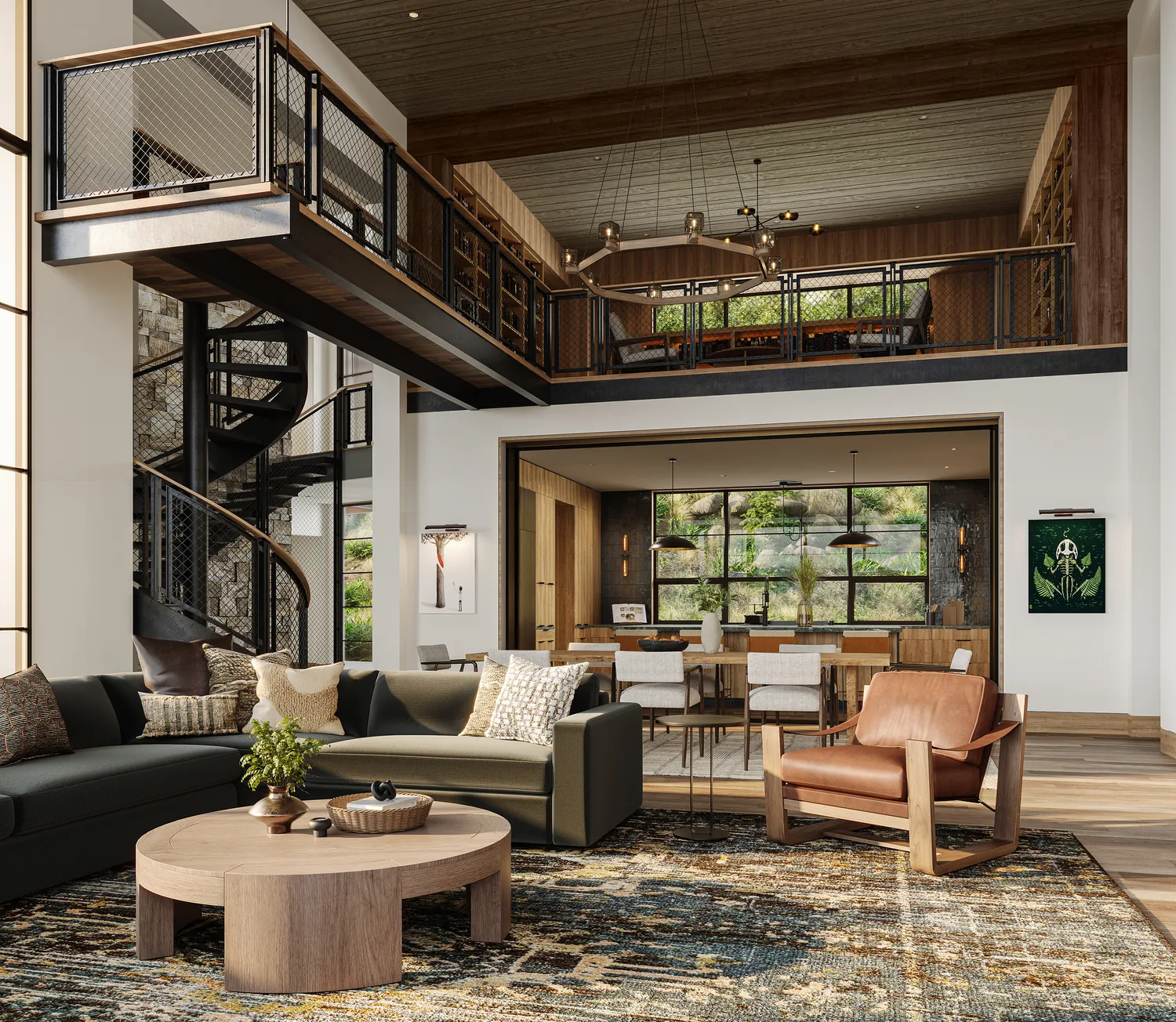
High-quality Visualization of a Stylish Living Room by PIXREADY
Why Choose PIXREADY
High-quality photorealistic rendering PIXREADY delivers detailed visuals with accurate lighting, materials, and textures. While many businesses search for the best AI for interior rendering, professional rendering delivers reliable, consistent results.
Tailored solutions for interiors Each project is developed based on specific goals and design concepts. This approach helps present interiors clearly and reflect the intended atmosphere and style.
Experience across industries PIXREADY works with both residential and commercial projects, including real estate and hospitality. The team understands how to handle complex requirements and deliver consistent quality.
Strong business-focused results Visuals serve not only design but also marketing and presentations, helping clients communicate ideas effectively and support decision-making.
Hybrid workflow with AI integration Instead of relying only on the best AI for rendering interior design, PIXREADY combines advanced tools with human expertise, ensuring precision, control, and high-quality outcomes for every project.
PIXREADY helped a US real estate company improve commercial property presentations using advanced 3D visualization. The team transformed low-quality input materials into high-quality, photorealistic renders that showcased each property’s full potential. By combining professional workflows with AI interior design visualization, PIXREADY created scalable solutions for projects of different sizes, from offices to retail spaces.
The new visuals increased property appeal, improved client engagement, and supported faster sales decisions. As a result, the company streamlined its sales process, received positive client feedback, and strengthened its position in a competitive real estate market.
Conclusion
AI interior design rendering is a powerful tool for generating ideas and speeding up early design stages. However, it cannot fully replace professional rendering when accuracy, control, and consistency are required. For real-world projects and high-impact visuals, expert workflows remain essential.
Partnering with PIXREADY allows businesses to combine advanced technology with professional expertise, ensuring reliable, high-quality results that support better decisions and stronger marketing performance.
No items found.
Share this post:
Get 3d expert on your side
More than a 3D rendering vendor, PIXREADY acts as a strategic CGI partner helping brands сreate scalable visual content for marketing, sales, and product launches. Let's explore your project and discuss how CGI can support your business goals!
Founded by a group of technology, architecture, and design professionals in 2018, PIXREADY is one of the challengers empowering the 3D visualization industry and making its products and services more affordable.We are determined to assist businesses around the world to create photorealistic images of their products and ideas and enrich the experience of their clients. We focus on the details, with the highest precision in every pixel.


.png)
.webp)

.webp)