
Architectural rendering programs have become essential for architects, designers, and developers. High-quality visualizations are no longer optional. The client expects high-quality visual effects in any architectural project.
Yet with so many rendering programs available, it can be overwhelming to choose the right one.
This article reviews the best architectural visualization software in 2026. It helps you choose the right tools or alternatives, such as rendering studios.
Why Choosing the Right Architectural Rendering Software Matters
Selecting the best rendering programs impacts efficiency, creativity, and profitability.
Improving Design Accuracy and Client Presentation
With architectural rendering programs, architects can transform blueprints into photorealistic results. This makes it easier for clients to understand complex projects.
Supporting Faster Project Development
The modern 3D visualisation tools for architecture streamline modeling, texturing, and lighting.
Enhancing Real Estate Marketing and Sales
Real estate developers rely on the best 3D architectural rendering software. This allows you to present real estate objects before they are built.
The same applies to selling houses in real estate marketing, where house rendering techniques are applicable.
Real-Time Collaboration and Virtual Walkthroughs
Modern 3D architectural visualization software integrates with VR and AR. This helps teams collaborate in real time, regardless of location.
Integration with BIM, CAD, and VR Workflows
The top architectural visualisation tools seamlessly connect with BIM and CAD tools. It allows smooth transitions from technical data to polished visuals.
Achieving Photorealistic Architectural Visualization
The best architectural visualisation software produces such realistic images. These visuals contain detailed textures and captivating compositions, capable of telling a compelling story through pictures.
Best Architecture Rendering Programs in 2026
The best architecture rendering software in 2026 includes V-Ray, Chaos Corona, D5 Render, Chaos V-Ray, Blender, Enscape, Lumion, Twinmotion, Autodesk 3ds Max, Unreal Engine, and Chaos Vantage.
1. V-Ray
Known for its realism, V-Ray is one of the best architecture rendering software add-ons.
Pros: Photorealistic results, supports many platforms.
Cons: Requires strong hardware; rendering can be slow; steeper learning curve.
Best for: Professionals needing cinematic-quality visualization software.
Pricing: Solo $540/year, Premium $778.80/year.
V-Ray stands out for its unmatched realism, advanced lighting, and material accuracy. It delivers cinematic-quality visuals and integrates with popular 3D platforms.
2. Chaos Corona
Chaos Corona is a photorealistic architectural visualization software, known for simple setup and natural-looking results.
Pros: Easy to learn, Chaos Cosmos library and Veras AI ideation tool.
Cons: Limited to 3ds Max and Cinema 4D; subscription-only.
Best for: Archviz artists and studios that want photorealism.
Pricing: Solo $414/year, Premium $562.80/year.
Chaos Corona balances a fast process with photorealistic quality. Recent updates added AI-based material generation and 3D Gaussian Splat support.
3. D5 Render
D5 Render is a real-time, GPU-driven path tracer that updates the image as you move the camera.
Pros: Free Community tier, real-time path tracing, built-in AI tools.
Cons: Windows-only and requires a ray-tracing GPU.
Best for: Freelancers and small studios.
Pricing: Community free (non-commercial); D5 Pro $360/year; D5 for Teams $708/seat/year.
D5 Render combines real-time feedback with a free entry point. It offers site-context tools, spatial tours, and VR export.
4. Chaos V-Ray
Chaos V-Ray is the multi-host V-Ray suite with the Collection tier built for full production pipelines.
Pros: One subscription works across 3ds Max, SketchUp, Revit, Rhino, Maya, and more.
Cons: Expensive at the top tier; Enscape and Corona are separate subscriptions.
Best for: Studios needing stills, animation, and real-time review in one Chaos pipeline.
Pricing: Premium $778.80/year; Collection $1,210.80/year.
Chaos V-Ray extends the renderer into a complete ecosystem. Premium suits teams sharing licenses, while Collection adds real-time and cloud tools for larger productions.
5. Blender
As a free, open-source option, Blender is among the best 3D rendering software for architecture on a budget.
Pros: Free, powerful features, built-in Cycles and Eevee render engines.
Cons: Steep learning curve, fewer industry-standard integrations.
Best for: Freelancers, startups, and experimentation.
Pricing: Free (open-source).
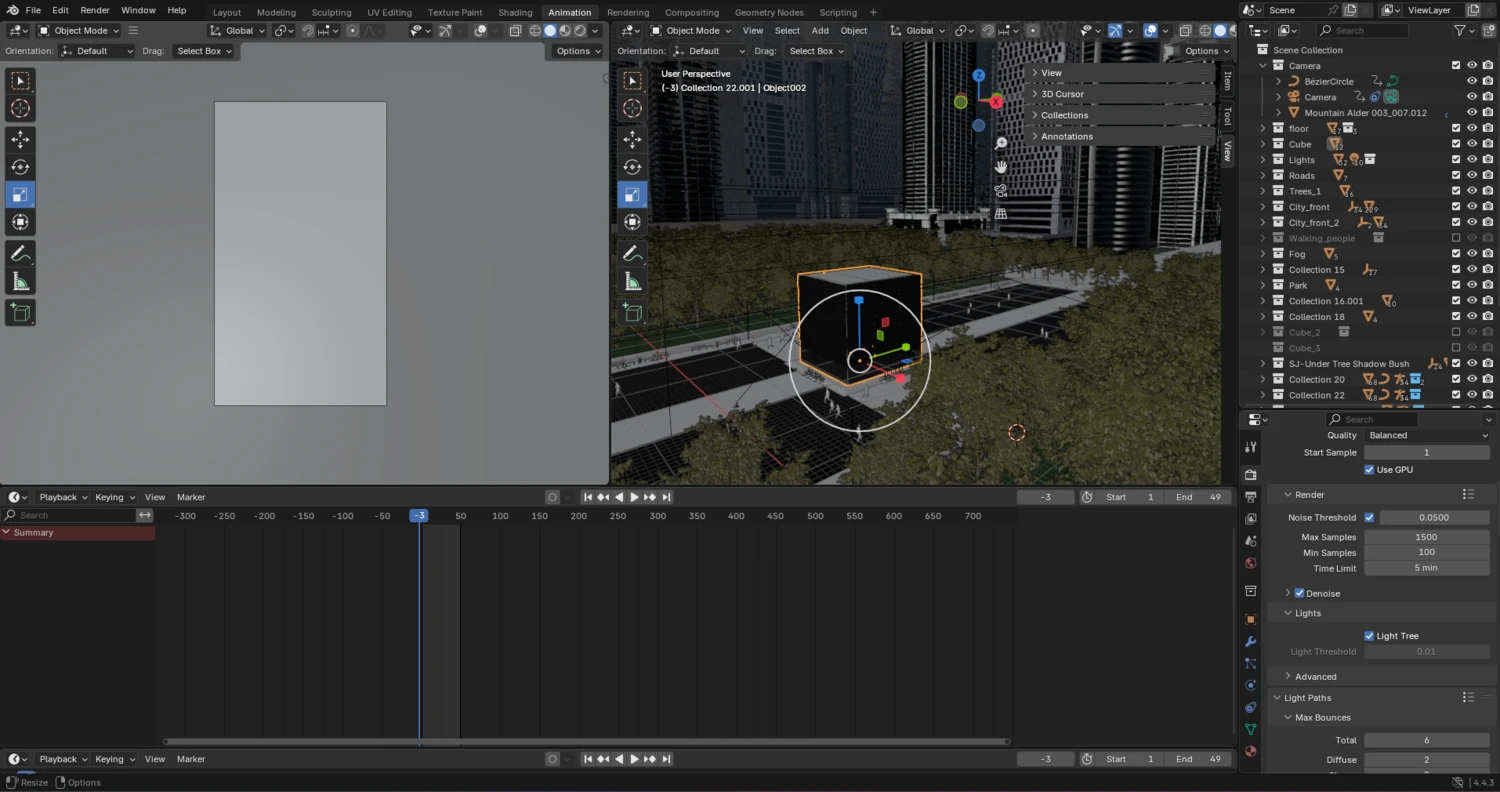
Blender is free and packed with professional-grade features. It offers modeling, animation, rendering, and video editing in one platform. A vast global community and constant updates support this tool.
6. Enscape
Enscape is a real-time rendering plugin that makes the best rendering software for architecture accessible.
Pros: Real-time rendering, live sync with the model, Chaos Cosmos assets, Apple Silicon support for four of five host apps.
Cons: Limited advanced controls; requires a GPU with dedicated VRAM.
Best for: Beginners and small studios.
Pricing: Solo $574.80/year, Premium $670.80/year, Collection $730.80/year.
Enscape combines simple rendering with the architecture rendering software you already use. It allows designers to quickly build and visualize.
7. Lumion
Popular for speed, Lumion delivers high-quality visuals in minutes.
Pros: Easy learning curve, fast rendering, 10,000+ models and materials, AI upscaler in Pro.
Cons: Less precise for technical details.
Best for: Real estate visuals and quick presentations.
Pricing: View $229/year, Pro $1,149/year, Pro Floating $1,499/year.
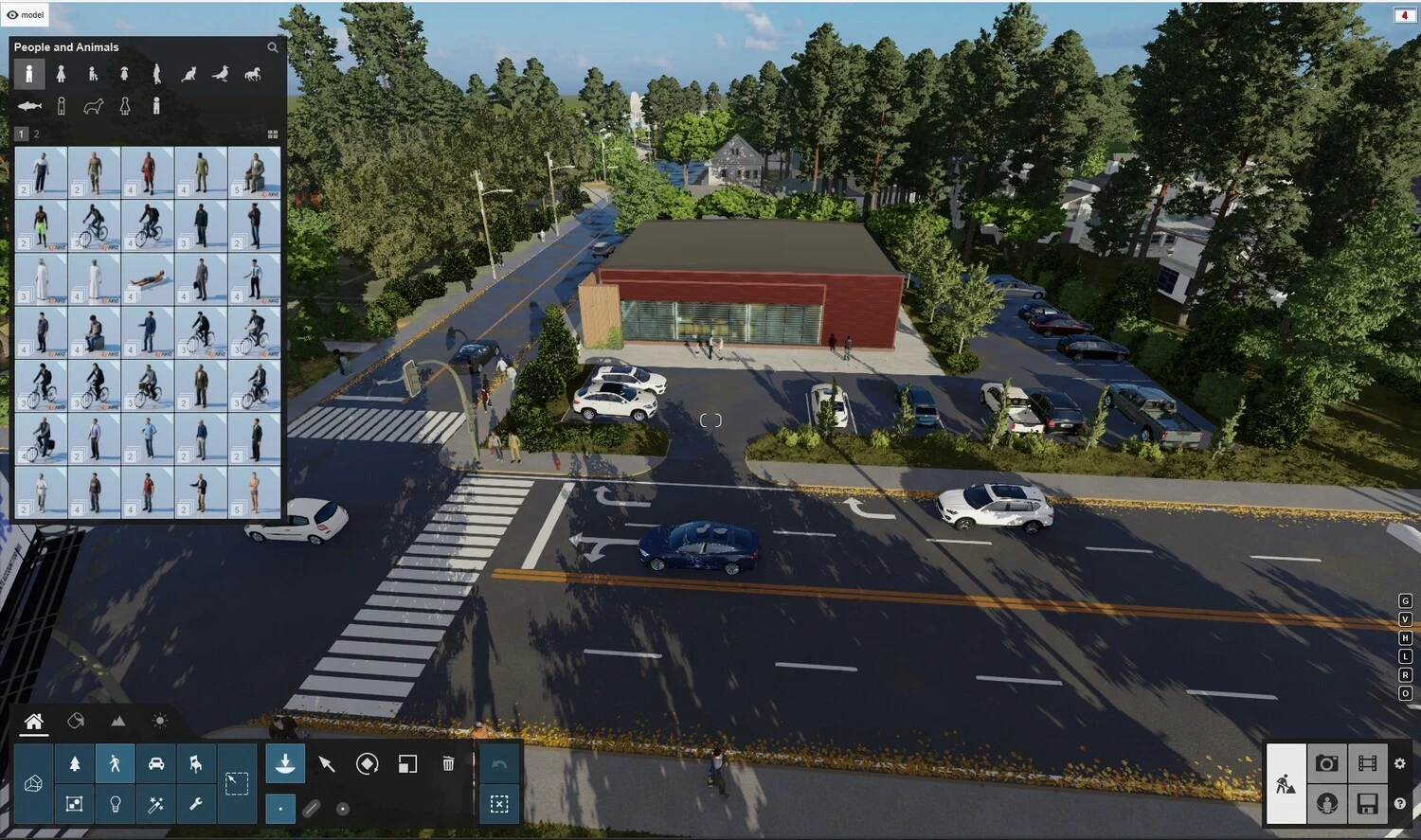
Lumion stands out for its speed and ease of use. It’s one of the top rendering software for architecture, allowing architects to create stunning, real-time renders quickly. Lumion offers vast asset libraries, instant results, and immersive environments without complex workflows.
8. Twinmotion
Twinmotion is Epic Games’ real-time renderer that combines BIM with real-time rendering to streamline workflows.
Pros: Direct link from CAD tools, great for immersive VR.
Cons: Requires strong hardware, especially for the Path Tracer.
Best for: Construction companies and urban planners.
Pricing: Free for individuals and companies under $1M annual revenue, students, and educators; $445/seat/year above that or for Twinmotion Cloud; Unreal Subscription $1,850/seat/year.
Twinmotion lets you design in Revit or other CAD tools and explore lifelike environments. This improves presentations, collaboration, and decision-making.
9. Autodesk 3ds Max
A powerhouse in 3D design, 3ds Max is widely used in architectural visualization.
Pros: Extensive plugins, strong modeling tools, integration with V-Ray, Chaos Corona, and other renderers.
Cons: Steep learning curve, expensive licensing.
Best for: Large firms needing the best software for architectural visualization.
Pricing: From $2,010/year.
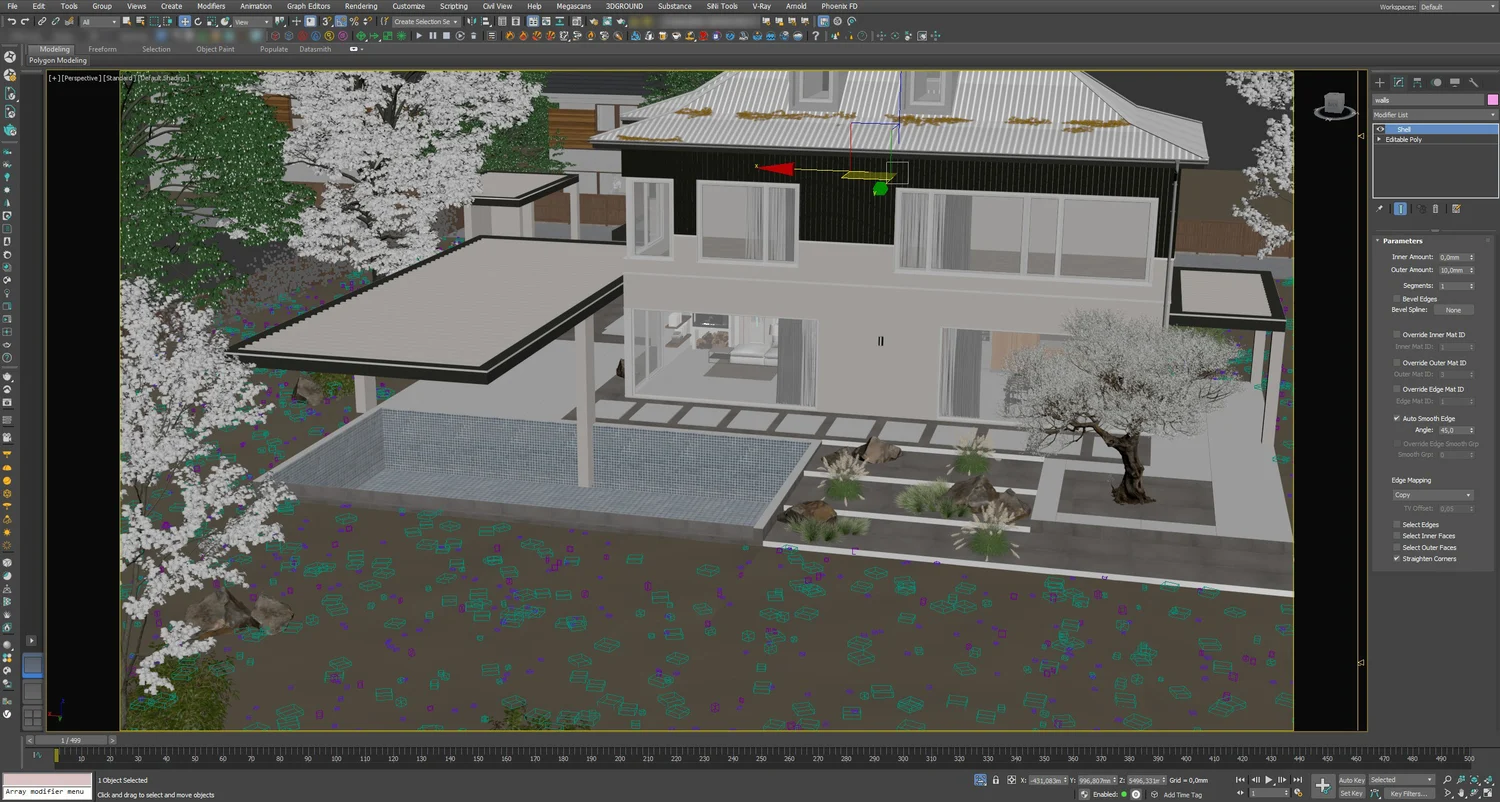
Autodesk 3ds Max is best suited for architects, visualization studios, and design professionals. All who need the best architecture 3D rendering software for complex modeling. It’s ideal for large-scale projects requiring precision, photorealism, and advanced customization.
10. Unreal Engine
Unreal Engine is Epic Games’ real-time engine for interactive architectural experiences, VR, and cinematic visuals.
Pros: Real-time photorealism, CAD and BIM import, interactive walkthroughs and VR.
Cons: Steep learning curve; demands powerful hardware; heavier setup.
Best for: Interactive walkthroughs, VR experiences, and large-scale real-time presentations.
Pricing: Free for individuals and companies under $1M annual gross revenue; Unreal Subscription $1,850/seat/year above that.
Unreal Engine is the best 3D software for architectural visualization for teams that need clients to navigate a space in real time often choose it for its flexibility and visual quality.
11. Chaos Vantage
Known for real-time ray tracing, Chaos Vantage delivers ultra-photorealistic visuals straight from V-Ray scenes.
Pros: Seamless integration with V-Ray, true-to-life lighting, GPU-accelerated speed.
Cons: Requires powerful hardware and fewer modeling tools.
Best for: High-end architectural visualization and design reviews.
Pricing: From $658.80/year.
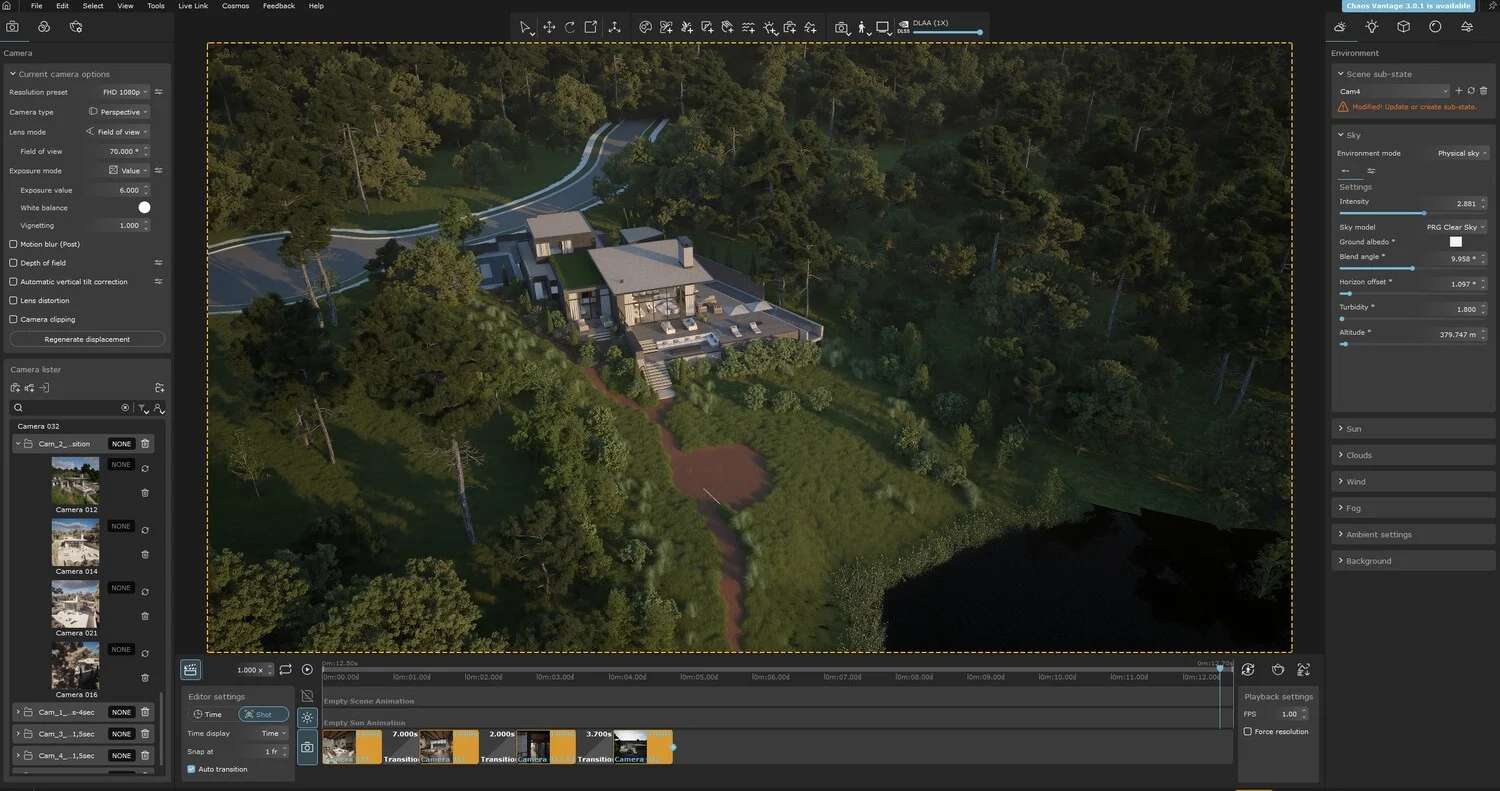
Chaos Vantage focuses on realism and performance. Unlike many architectural rendering programs, it allows users to explore massive scenes in real time with cinematic lighting and reflections. It’s ideal for architects and designers seeking immersive, photorealistic presentations.
Free vs. Paid Architectural Rendering Programs
Designers often have to choose the best architecture software for rendering. On the one hand, free programs like Blender. Оn the other hand, paid tools like V-Ray, Lumion, or Twinmotion. Each option has advantages and limitations depending on the project’s needs.
Free software is popular because it costs nothing and has a strong, active community. It offers advanced modeling, animation, and rendering capabilities. These features make it versatile for various design projects. But Blender has a steep learning curve.
Beginners may find it challenging to navigate its complex interface. Creating realistic architectural renders often requires more plugins or significant technical skill.
Paid 3D architectural visualisation software ranks speed, efficiency, and user-friendly interfaces. V-Ray provides high-quality photorealistic rendering with precise lighting and material control. This is ideal for professional presentations.
Lumion and Twinmotion focus on real-time visualization. This allows architects to create immersive walkthroughs and impressive animations quickly. These tools are easier to learn. They include extensive materials, objects, and environment libraries.
The main trade-offs are cost versus flexibility. Free architecture rendering programs demand more time. They offer effort but complete creative control. Paid software speeds up production and simplifies workflows, but requires a financial investment.
Combining both approaches delivers the best results for many architects.
Challenges of Future Architectural Rendering Software
AI is speeding up architectural visualization, but the next generation of architecture rendering software still has to solve four practical problems before it can handle production work on its own.
- AI accuracy and control. AI can accelerate visualization, but maintaining precise geometry, materials, proportions, and architectural details remains challenging. A render that looks convincing but misplaces a window or changes a facade’s proportions cannot be used for approvals or client sign-off.
- Consistency. AI-generated visuals may vary between iterations, which makes consistent project-wide imagery difficult. A set of exterior renderings, interiors, and marketing images needs the same lighting, materials, and style across every view.
- Workflow integration. Future architecture rendering programs need to integrate smoothly with BIM, 3D modeling, and real-time rendering workflows, so design changes carry over without rebuilding scenes by hand.
- Human expertise. AI will automate more rendering tasks, but professional judgment and 3D expertise will remain essential for production-ready results. Artists decide what is accurate, what fits the brand, and what is ready to show a client.
For now, the most reliable results come from a hybrid workflow, where AI speeds up early-stage ideation and expert 3D artists control accuracy, consistency, and final quality.
In-House Rendering vs. Partnering with a Studio
Companies often compare two options when choosing a 3D visualization approach. In-house rendering versus collaboration with a studio. Consider the differences in time, cost, and quality.
Key differences between the approaches:
- Time: in-house rendering times can slow projects down, and training new staff adds more delays. A studio delivers high-quality results quickly, often within tight deadlines.
- Cost: in-house rendering requires expensive licenses for the best 3D architectural rendering software, constantly updated workstations, and staff training, which raises the architectural rendering cost and can become inefficient for smaller businesses.
- Quality: in-house results depend on a team with strong technical skills and powerful equipment. A studio already has the latest technology, skilled artists, and optimized pipelines.
- Consistency: a professional studio ensures accuracy, style, and branding across all visuals. In-house consistency depends on the internal team’s skills and capacity.
- Control: in-house rendering offers complete control over the process. A studio takes on production, so internal teams can focus on design and strategy.
- Scalability: in-house capacity is limited by team size and hardware, so large projects can overload it. A studio can scale production up and down as workloads change.
For most, outsourcing visualization is a wise choice. It allows internal teams to focus on design and strategy.
Why PIXREADY Is a Trusted Partner for Architectural Visualization
PIXREADY is an expert in architectural visualization, as demonstrated by its award-winning projects. Most recently, PIXREADY won Platinum at the International Architecture & Design Awards 2026 for its AI-powered Bionic Architecture concept. PIXREADY delivers photorealistic results with advanced architectural visualization software and expert artistry, as in the project In the Future of Architecture.
PIXREADY’s team combines 3D modeling and rendering for precision and realism with AI-powered tools that speed up ideation and enhance atmosphere, while expert artists keep full control over quality. PIXREADY creates different types of architectural rendering for offices and retail spaces, even from basic photographs. This commercial rendering work covers both exterior and interior spaces.
- Realism and precision – Photorealistic details that rival photography.
- Flexibility – Support for stills, 360° tours, VR, and animations.
- Collaboration – Seamless teamwork with architects, developers, and designers.
- Reliable and proven years of practice in 3D architectural rendering service.
- Proven results – Case studies show success:

A Business Hub rendering accelerated investor funding. For REIWA Development, PIXREADY created photorealistic 3D renderings and a cinematic animation. It transformed architectural plans into an emotional story. The visuals highlighted sleek exteriors, sea-view terraces, and refined office interiors, with smooth camera movements and atmospheric lighting. These assets became central to the marketing strategy, inspiring potential investors and tenants.
A Townhouse project increased buyer inquiries. PIXREADY partnered with a real estate development company. The goal was to create photorealistic 3D visualizations of a modern townhouse project. The townhouse itself was under construction. PIXREADY’s visuals highlighted the elegant architecture, natural light, and landscaped grounds. This helped buyers and investors envision the finished homes. The visuals highlighted elegant architecture, natural light, and landscaped grounds, helping buyers and investors envision the finished homes.
These renderings streamlined marketing, accelerated approvals, and supported pre-sales. PIXREADY reduced risk while enhancing project credibility. This eliminated the need for expensive mock-ups. Thanks to this collaboration, the developer generated interest early and presented its vision before the first brick was laid.

Conclusion
Choosing the best 3D architecture rendering software depends on your budget, workflow, and needs. The right solution empowers better design, faster delivery, and stronger marketing. From free options like Blender to advanced tools like V-Ray and Lumion.
PIXREADY’s best architectural rendering software expertise provides a reliable, cost-effective path. It is a success for teams that want top-tier visuals without heavy investment.
Contact PIXREADY today to bring your projects to life with stunning visualizations service and the best rendering software for architecture.
Get 3d expert on your side
More than a 3D rendering vendor, PIXREADY acts as a strategic CGI partner helping brands
сreate scalable visual content for marketing, sales, and product launches. Let's explore your
project and discuss how CGI can support your business goals!

Founded by a group of technology, architecture, and design professionals in 2018, PIXREADY is one of the challengers empowering the 3D visualization industry and making its products and services more affordable.We are determined to assist businesses around the world to create photorealistic images of their products and ideas and enrich the experience of their clients. We focus on the details, with the highest precision in every pixel.