Trade Show Booth Rendering: Complete Guide for Brands & Exhibitors
Explore what a booth rendering is and how it can help you prepare for trade shows.

Explore what a booth rendering is and how it can help you prepare for trade shows.
Every year, brands spend thousands on exhibition stands and see the final result only on the show floor. That’s a costly way to discover a problem. 3D rendering changes that, letting you visualize, adjust, and approve your stand before a single panel is installed.
This guide explains what trade show rendering is, how it works, and how to choose the right partner.
This is the process of creating photorealistic 3D visuals of an exhibition stand. Unlike flat floor plans or technical CAD drawings, a booth render shows exactly how a stand will look. It’s a complete visual with lighting, materials, branding, and spatial layout.
This distinction matters as communication gaps between designers, manufacturers, and clients are where most booth problems originate. An exhibition booth 3D rendering provides the same visual reference for all, reducing the risk of misunderstanding.
It’s used across all stand types, such as:
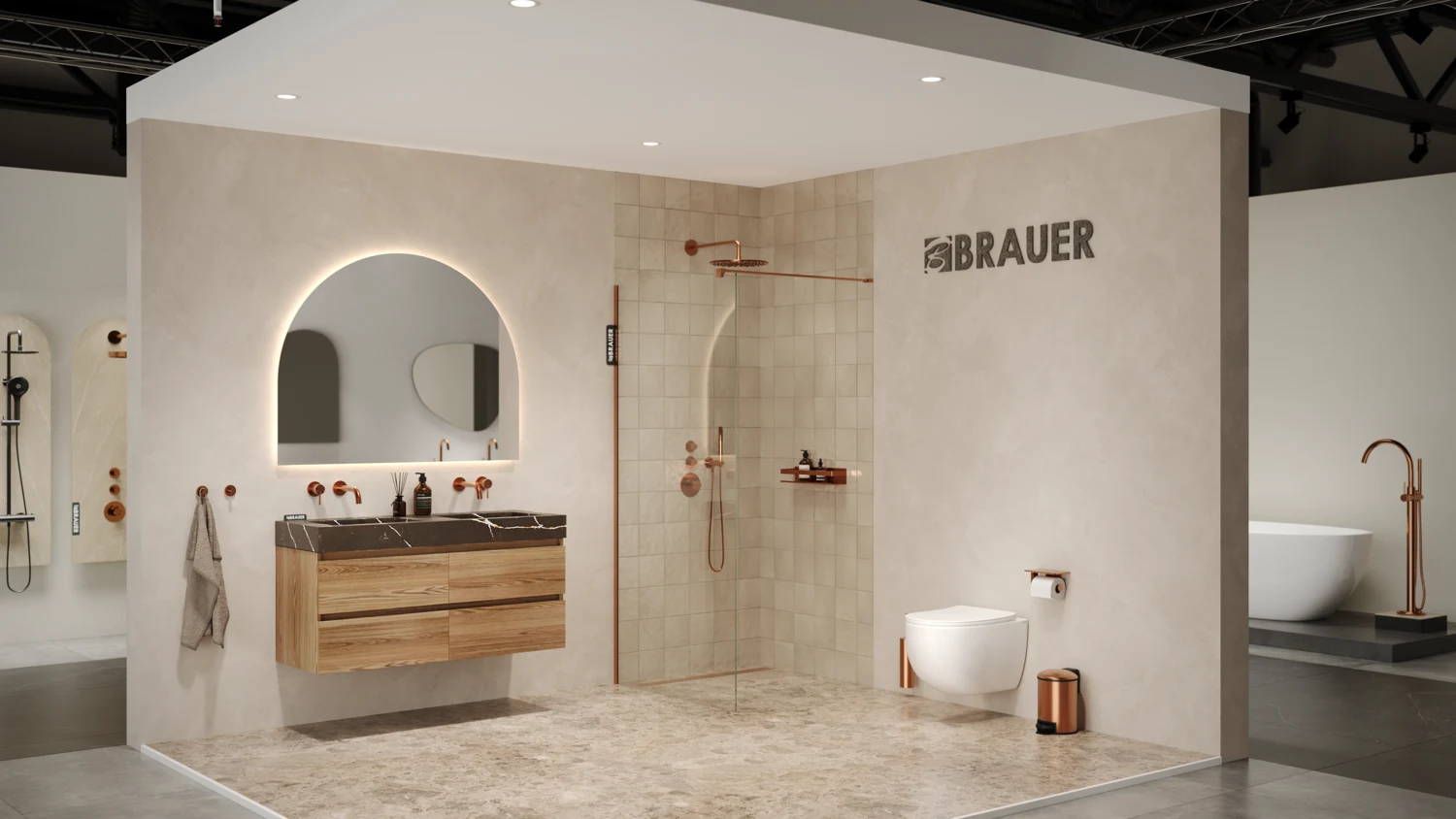
3D trade show booth design starts long before fabrication. Here’s why leading brands include rendering in their exhibition planning.
Teams can test layout, materials, and branding directions. Changing something in a 3D exhibition booth design costs nothing, while changing direction mid-build requires more funds.
Modern 3D rendering tools produce results realistic enough that non-technical stakeholders can evaluate and approve designs. This allows for accelerating approval cycles and eliminating rounds of edits.
Design or sightlight problems and branding misalignments are cheaper to fix on screen than during fabrication. Exhibition booth 3D visualization catches these issues at the earliest stage.
3D exhibition booth design lets brands visualize how colors, graphics, lighting, and messaging will read. The result is a booth that reflects brand identity with precision.
Builders, printers, lighting specialists, and installers all work from the same 3D render. This eliminates the misinterpretations that arise when briefs are interpreted differently.
Trade show booth renderings are production-ready marketing assets once they’re approved. You can use them across:
Different industries need different visualization solutions for trade show participation. Exhibition booth 3D rendering bridges the gap between concept and reality for all of them.
Heavy machinery and equipment are difficult to communicate through sketches. Trade show rendering lets manufacturers present scale, configuration, and operation context.
Tech brands need booths that feel immersive and cutting-edge. 3D rendering helps plan interactive zones, screen placement, and visitor flow.
Vehicle displays demand precision for proportions, finishes, and lighting. A booth design rendering ensures the final space matches the brand’s standard.
Medical device companies face strict presentation requirements. A photorealistic exhibition stand model ensures meeting professional standards.
Trade show renders show fabric textures, wood finishes, and upholstery in realistic lighting conditions, increasing buyer confidence.
Screen-heavy booths need careful lighting design. Exhibition rendering services help optimize placement and light before any hardware is ordered.
Counter layouts, service flow, and atmosphere affect visitor experience. Rendering lets F&B brands test configurations before production.
Large-scale and structural installations need spatial context. 3D trade show booth rendering communicates size and impact in ways no floor plan can.
Collections require a consistent visual identity across every display zone. Rendering ensures branding, colors, and layout align before production begins.
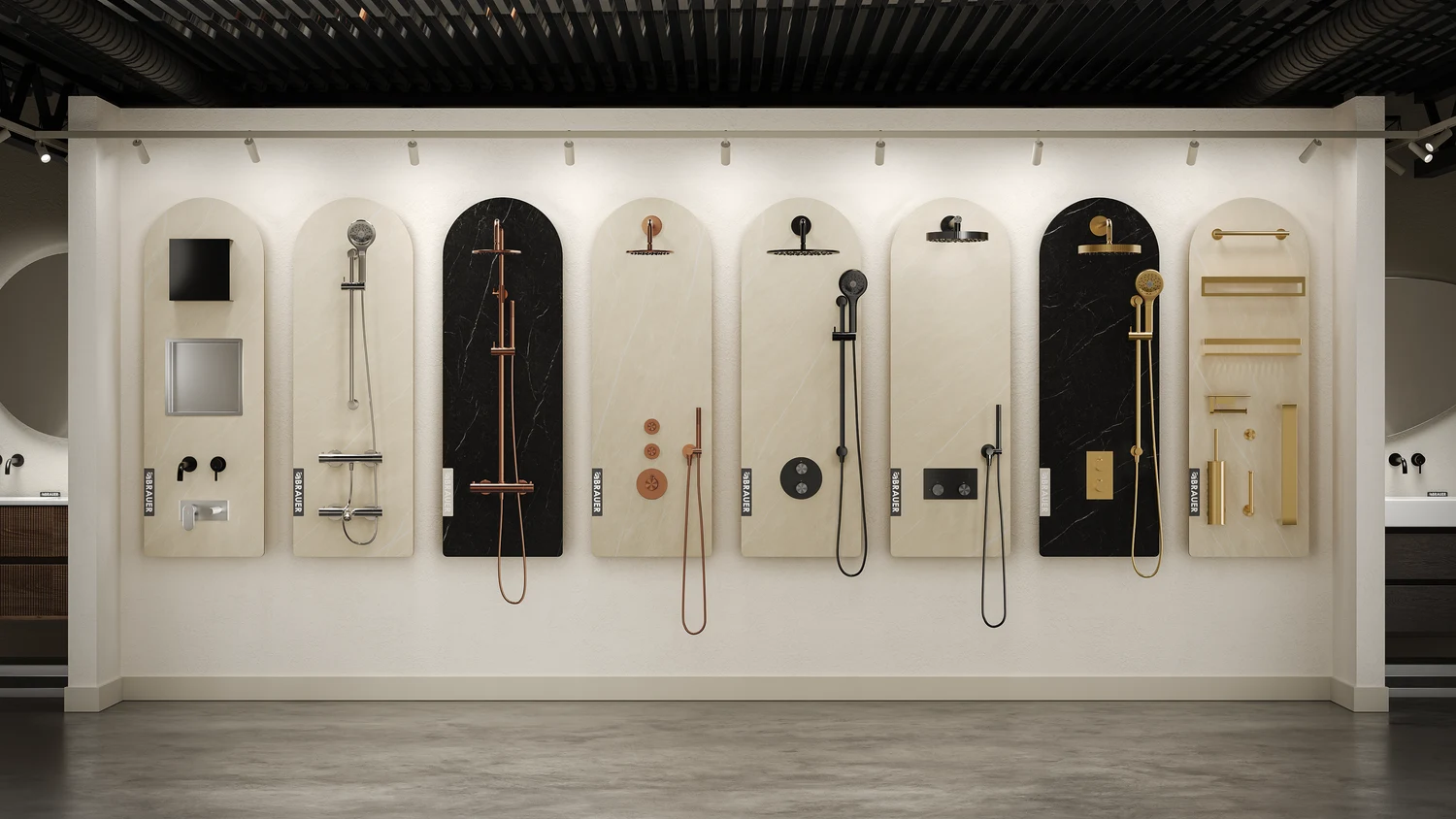
Not every project requires the same deliverables. Here’s what each type offers.
A high-resolution image of the booth exterior that appears on the show floor. Used for client approvals, marketing materials, and stakeholder presentations.
See the booth as attendees will. Interior rendering services capture this visitor's-eye view, so sightlines, product placement, and flow can be adjusted before anything gets built.
Shows how specific products sit within the booth. Manufacturing, automotive, and electronics exhibitors use product rendering services like this to sell the product before the booth exists.
Trade show booth renderings demonstrate how artificial and ambient light will interact with materials, scenes, and graphics. It prevents costly surprises during on-site setup.
Places your 3D booth within a simulated show floor, surrounded by other stands. Heps brand assesses visibility and competitive presence.
Trade show renderings that allow stakeholders to explore the space from any angle. Speeds up remote approvals and reduces revision rounds.
Short video sequences that simulate moving through the booth as a visitor would. Used in pre-show marketing, investor decks, and internal presentations.
The most immersive format for pre-production review. Stakeholders experience the booth at full scale in a virtual environment using a headset or tablet overlay.
CAD drawings have their place in the fabrication process. Still, they and 3D rendering serve different purposes.
A CAD drawing tells an engineer how to build a booth. Trade show booth renders show a marketing team, CO, and a client what they’re actually getting. The average cost of exhibiting ranges from $10,000 to $30,000 per booth, and that figure only covers the display itself. At that scale, rendering is a risk management tool.
Photography documents what exists, while rendering creates what doesn’t yet exist. These tools serve different stages of the exhibition lifecycle.
Trade show booth renders give brands a complete visual toolkit months before the show. That’s usable in pre-event campaigns, sponsorship pitches, and stakeholder decks. Photography captures the result after the investment is already made.
Rendering services are needed when a brand is launching new products, building a new stand concept, or exhibiting for the first time. Once the booth is built and the show concludes, photography takes over — documenting the real-world result, capturing visitor interactions, and building the brand's archive for future planning. Used together, rendering and photography cover the full journey: from concept approval to post-show storytelling.
The quality of your rendering company affects the quality of your marketing assets and your show floor results. Here’s what to evaluate before signing on:
If you’re looking for rendering services that go beyond generic visualization, PIXREADY delivers studio-quality output built around commercial performance.

French artisanal lighting brand Entrelacs needed to visualize its bronze and alabaster collection within a custom exhibition stand. PIXREADY produced a photorealistic booth render. We captured fixture details, material textures, light-shadow interplay, and spatial layout with precision.
The result was a durable, reusable stand adapted for future events, with visuals that communicated the brand story and generated excitement among clients.
Exhibition stands are planned months in advance, approved by multiple stakeholders, and built to tight deadlines. A single miscommunication can cost thousands. Booth rendering removes that risk, giving a clear, photorealistic reference before fabrication begins. It also doubles as a marketing asset, a sales tool, and a stakeholder alignment resource.
Ready to visualize your next stand? Get in touch with PIXREADY and see what your booth looks like before fabrication begins.
More than a 3D rendering vendor, PIXREADY acts as a strategic CGI partner helping brands
сreate scalable visual content for marketing, sales, and product launches. Let's explore your
project and discuss how CGI can support your business goals!

Sophia Andrusyshyna is a Business Development Team Lead at PIXREADY, a 3D visualization company. She helps clients transform their ideas into impactful 3D assets by guiding them through every stage of the collaboration. With strong expertise in understanding architectural and interior design needs, she ensures that each PIXREADY project runs smoothly and delivers measurable value. Her focus is on building lasting partnerships and helping clients make the most of cutting-edge visualization solutions.
Booth rendering is the creation of photorealistic 3D visuals of an exhibition stand before it's physically built. It’s used for approvals, marketing, and fabrication guidance.
It eliminates costly design errors, aligns stakeholders early, and produces marketing assets ready to use before the show opens.
Rendering services typically range from $800 to $5,000+, depending on booth complexity, number of views, and animation requirements.
A first concept booth usually arrives within a few business days. Full photorealistic packages with revisions typically take two to four weeks.
Typically, floor plan dimensions, brand guidelines, logo files, and any product references. CAD files accelerate the 3D exhibition booth design process significantly.
Yes — trade show booth render can be a production-ready asset suitable for social media, email campaigns, landing pages, event announcements, and investor presentations.

.webp)
