AI Product Rendering & AI Photos vs Professional Rendering
Discover how AI product rendering and professional 3D rendering each play unique roles in visualization.
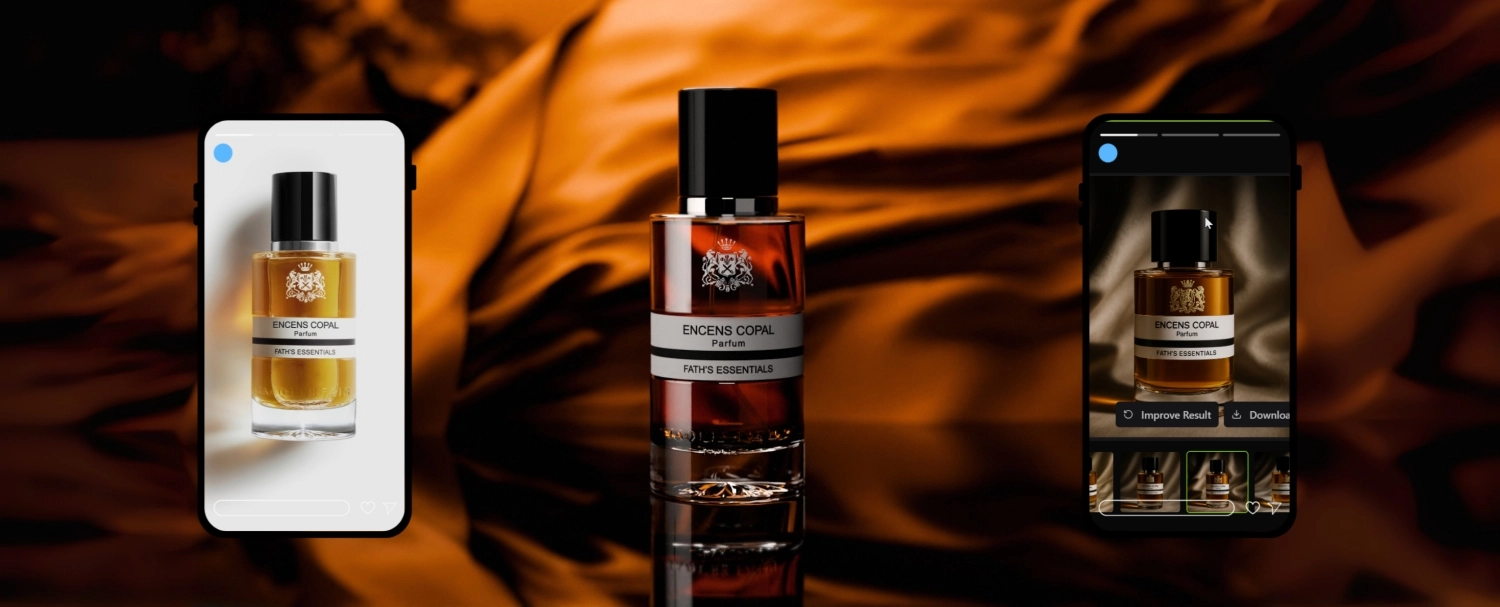
AI product photos and AI product rendering are gaining strong attention among product manufacturers. Many brands are exploring these tools to create visuals faster and at a lower cost than traditional methods. AI-generated images can quickly produce lifestyle scenes, product variations, and marketing visuals, making them appealing for fast-moving markets.
However, the main challenge is consistency. Businesses want speed and savings, but they also need visuals that match their brand style, product details, and quality standards. AI tools do not consistently deliver the same level of control or accuracy, which can create risks for premium products.
In this article, we will explain when AI solutions make sense and when professional 3D rendering is the better choice.
The Rise of AI in Product Visualization
Over the past year, machine intelligence has surged in popularity. AI-powered tools generate synthetic images by using machine learning models—often trained on vast datasets of existing photos—to create new visuals. Typically, the user uploads a basic photo or provides a text prompt, and the artificial intelligence tool automatically generates lifelike images in various backgrounds, angles, or styles.
Tools like Pebblely, Flair.ai, Claid.ai, and Creatify.ai promise quick, automated visuals with minimal input. Their key appeal? Instant images are created from item photos or a simple text prompt. As 3D product rendering AI generators become more accessible, brands are asking: Is it good enough for real marketing campaigns, or just quick mockups? Can AI visuals replace the need for complete 3D renders?

How AI Photos Generators Work - and Where They Excel
Machine learning tools leverage large datasets and neural networks to interpret your input—often a basic image—and generate lifestyle visuals, mockups, or clean e-commerce designs. AI 3D product rendering generators offer several practical advantages, especially for teams working under tight deadlines or with limited budgets.
Where AI tools shine:
Speed: Images can be generated within seconds. Users can create AI render product photos almost instantly by uploading a picture or entering a simple text prompt—no cameras, studios, or logistics required. This allows teams to move from concept to visual content in minutes rather than days.
Cost-Effective: Intelligent systems are also highly cost-effective for startups, MVPs, and internal use. They eliminate the need for professional photographers, set designers, or expensive post-production work. Instead, brands can produce visually appealing content with just a few clicks—ideal when resources are limited.
Ideation & A/B Testing: Marketers can quickly generate multiple product rendering AI variations and test them across ads, emails, or social media to see which resonates best. This agility helps refine branding, boost engagement, and shorten feedback loops—all while keeping costs low.
Auto Enhancements: Many tools offer built-in features like automatic background removal, lighting adjustments, and image enhancement, streamlining workflows and improving visual quality with minimal effort. This makes innovative systems great for generating consistent-looking content without advanced editing skills.
No Photoshoots Required: Upload and generate. Whether you’re experimenting with layouts, exploring different backgrounds, or testing seasonal themes, artificial intelligence makes it easy to create placeholder visuals for internal reviews or presentations.
In short, AI excels at fast, flexible content creation, especially when perfect realism and brand precision aren’t critical.
Popular Platforms Using AI Product Visuals
- Pebblely: Enhances e-commerce item photos with AI backgrounds and lighting
- Flair.ai: Drag-and-drop UI to generate scenes using AI-powered product visuals and photos
- Claid.ai: Designed for marketplace scaling (Amazon, Shopify) with batch edits and image enhancement
- Creatify.ai: Focuses on videos and motion content created automatically from static photos
For small teams or rapid prototyping, using an AI product render for create product visuals and photography can be a time-saver. But for larger brands, it’s not always enough.
AI Product Rendering: The Hybrid Frontier
- Not the same as AI photos
AI product renders are different from simple AI-generated photos. It focuses on structure and design control, not random image creation. - Definition of AI-assisted product rendering
This method combines AI tools with guided inputs to create controlled product visuals. - How it differs from pure image generation
Unlike pure AI images, AI product 3D rendering follows defined shapes, proportions, and visual rules. - Role of references and partial 3D data
Product references, prompts, and partial 3D models help guide the final result and maintain consistency. - Typical outputs
The results are usually conceptual renders and stylized product visuals used for early-stage design and creative marketing.
How AI Product Renders Works
- Simple explanation without technical complexity
An AI product 3D rendering uses trained models to turn basic inputs into visual results. The process is designed to be fast and accessible. - Text-to-image workflows
In this workflow, users describe the product using written prompts. The AI interprets these words and generates an image based on learned patterns. - Image-to-image workflows
Here, an existing image, sketch, or reference is used to guide the result. This helps control the overall look and composition. - AI interpretation of materials and form
An AI estimates how materials, shapes, and lighting should appear. It relies on visual patterns rather than fundamental physical understanding. - Difference from accurate CGI rendering
AI does not work with real geometry or precise measurements. CGI builds exact models, while AI creates visual guesses. - Limits with complex product shapes
AI still struggles with detailed structures, sharp edges, and technical parts. This makes it less reliable for complex or production-ready products.
Where AI-Generated Photos and AI Product Renderings Fall Short for Product Manufacturers
Despite the hype, AI-generated product photos have significant limitations, especially for professional manufacturers:
- Lack of Brand Control: machine intelligence often ignores brand guidelines or design systems
- Inconsistent Results: Visual style may vary drastically between outputs
- Texture & Detail Limitations: AI struggles with metallics, reflections, glass, and fine materials
- No True Camera Control: Angles and lighting are algorithm-based, not directed
- Unclear Licensing: Output rights are often vague or restricted
- Not Print-Ready: Quality often too low for high-res packaging or ad campaigns
Limitations of AI product renderings for serious product brands:
- Lack of dimensional accuracy
AI product render does not follow real measurements. Shapes and proportions can be incorrect, which is risky for technical or manufactured products. - Inconsistent product details
Essential details such as logos, edges, and small features may change between images. This creates confusion and reduces brand reliability. - Poor material and finish representation
AI often guesses how materials look. It struggles to show accurate textures, reflections, and surface finishes. - No reusable production assets
AI images do not generate accurate 3D models. This means the visuals cannot be reused or updated easily for future projects. - No true iteration based on engineering feedback
Structural changes and technical updates are difficult to control, making AI unsuitable for serious product development.
If you need reliable, campaign-ready visuals with brand precision, product renders AI may fall short. As they sometimes say in design, engineering, and creative work to emphasize that you can’t have it all: “Fast, cheap, good—pick two.”
.webp)
The Strategic Edge of 3D Rendering for Product Brands
Unlike AI-generated images, professional 3D product rendering offers unmatched control, precision, and scalability, essential for professional brands.
Benefits of Сhoosing Professional 3D Visualization over AI photography
- Full Customization: Materials, textures, lighting, and layouts are all brand-driven
- Photorealism: Accurate shadows, reflections, and depth
- Scalable Production: Easily create color variants, angle shots, 360° views
- Packaging & Print Ready: High-resolution for catalogs, billboards, or Amazon listings
- Multiplatform Usage: Reuse models for animations, configurators, AR, and more
- IP Ownership: Clear rights and commercial use without risk
For businesses seeking brand storytelling through visuals, AI photos can’t match the depth of 3D rendering. These are really different tools for different tasks.
A well-known proverb is: “Quality is remembered long after the price is forgotten.” This saying emphasizes that when something is well-made or thoughtfully crafted, its lasting impact far outweighs the initial cost. It’s especially relevant when comparing high-end 3D rendering with fast, low-cost AI-generated images—quality delivers value that endures.

AI Product Rendering & Photos vs. Professional 3D Rendering: Side-by-Side Comparison
The decision between AI product render and professional 3D rendering ultimately depends on your business needs—specifically, budget, quality expectations, and use case. If you need quick, low-cost visuals for internal presentations, MVPs, or A/B testing, AI tools can deliver fast results with minimal input.
However, for launches, ad campaigns, or packaging, where visual precision and brand consistency are critical, 3D rendering is the superior choice. It offers complete control over materials, lighting, and camera angles. Machine intelligence excels at speed and experimentation, while 3D delivers the detail and realism needed to make a lasting brand impression.
But no matter what choice you make, quality creates value. Long after trends fade or prices are forgotten, well-crafted visuals continue to build trust, elevate brands, and drive long-term results.
The Bottom Line: When to Use AI Tools, and When to Invest in 3D Rendering
Use 3D Product Rendering AI When:
- You’re ideating or testing fast
- The budget is tight
- You only need placeholder or concept visuals
AI-generated images are a wise choice in this case.
Choose Professional 3D Product Rendering When:
- You’re launching a product, ad campaign, or packaging
- Accuracy, realism, and brand alignment are essential
- You need reusable, flexible visual assets
Ultimately, using AI 3D product rendering may save time, but it won’t replace the precision and polish of 3D. When your visuals represent your brand to the world—on packaging, e-commerce platforms, or in ad campaigns—professional 3D rendering is the clear winner. It delivers photorealistic accuracy, complete creative control, and reusable assets across multiple channels.
If your goal is long-term brand value, visual consistency, and commercial readiness, 3D rendering offers a quality standard that innovative systems can’t match yet.
Hybrid Workflow: Combining AI with Professional Product Rendering
- Using AI for concept and ideation
AI tools are helpful at the early stage of a project. They help teams explore ideas, styles, and moods quickly. Brands can test different directions without investing time in full production. This supports creative thinking and speeds up the first decision phase. - Refining visuals with professional CGI
Once a concept is approved, professional CGI takes over. 3D artists build accurate models with correct proportions, materials, and details. This step turns rough ideas into controlled, high-quality visuals ready for real use. - Faster approvals and fewer revisions
The hybrid workflow helps clients see ideas early and clearly. AI speeds up exploration, while CGI ensures precision. This combination reduces misunderstandings and speeds approvals with fewer revision rounds. - Maintaining realism and brand safety
Professional rendering keeps visuals consistent with brand rules and product reality. Colors, finishes, and details stay accurate, protecting brand trust and avoiding risky visual errors. - Aligned with PIXREADY’s approach
This workflow matches PIXREADY’s focus on speed, quality, and business-ready results.
Why Choose PIXREADY for Product Visualization in the Age of AI
As AI render product evolves, PIXREADY offers the best of both worlds: cutting-edge tech and expert craftsmanship.
- We combine AI-assisted workflows with human design precision.
- Our team delivers photorealistic 3D renders custom-tailored to your product and audience.
- You get transparent pricing, creative collaboration, and assets ready for packaging, Amazon, or campaign use.
- We offer animation, modeling, 360° views, and AR-ready visuals all under one roof.
- With our award-winning expertise, we turn your ideas into stunning, market-ready visuals that sell.
At PIXREADY, we specialize in photorealistic visualization of products, interiors, and architectural projects. If you are interested in product rendering AI solutions, please get in touch with us.
3D Visualization for a Perfume Brand
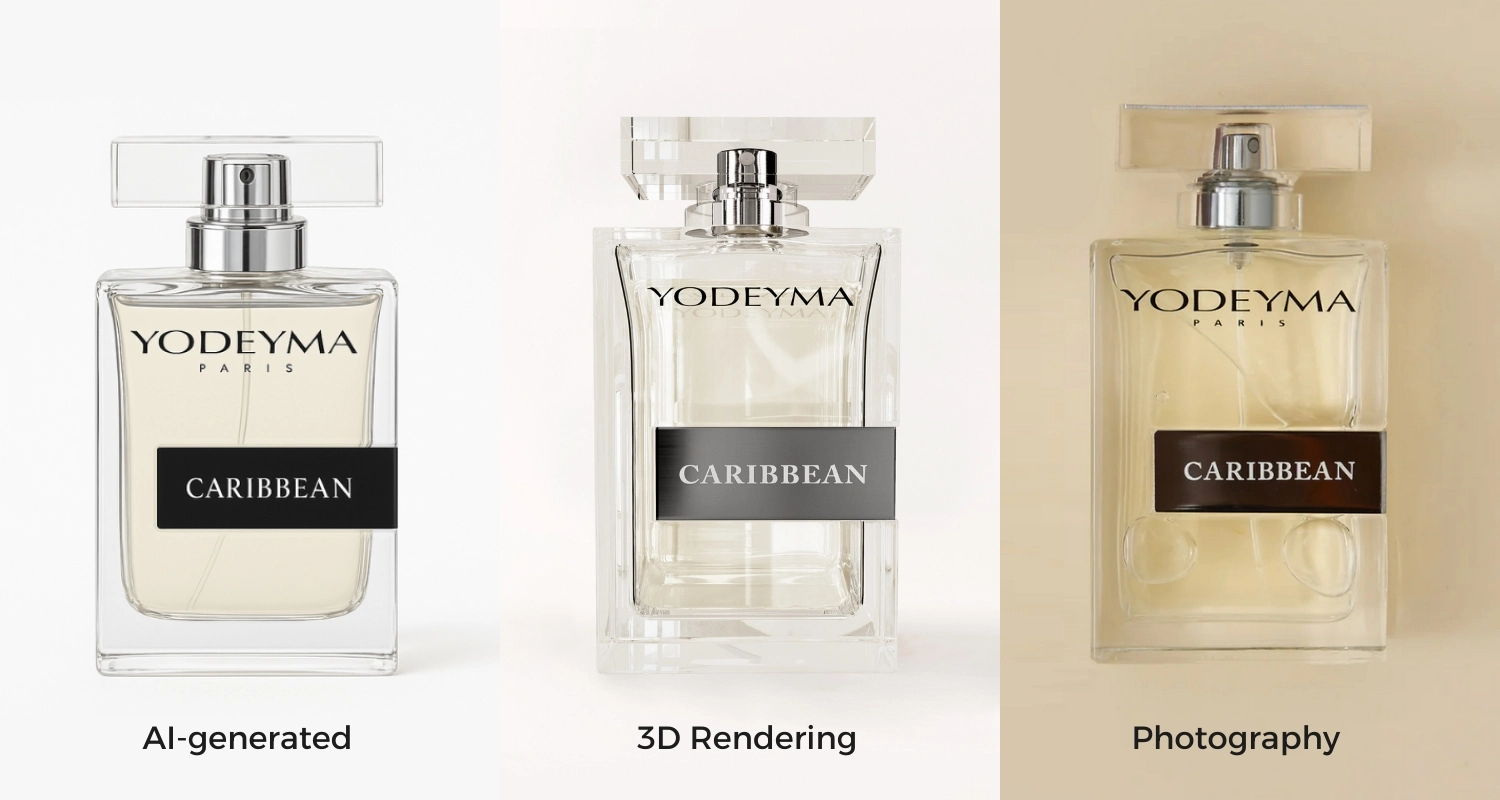
To help Rocket Digital scale content for their client Yodeyma, PIXREADY created a large suite of high-quality, adaptable 3D visuals. We started by producing clean white-background renders for over 100 perfume SKUs, resulting in nearly 800 tailored images for e-commerce, print, and digital campaigns. We also refreshed a smaller cosmetics line with consistent, photorealistic 3D visuals — the kind of detail-driven work that comes from partnering with an experienced cosmetic 3D rendering company rather than relying on generic AI tools.
Result
Over 50 expressive visuals are now active across social platforms and ads. Short 3D animations further enhanced campaign performance, helping Yodeyma expand reach and visual impact.

3D Visualization for E-commerce
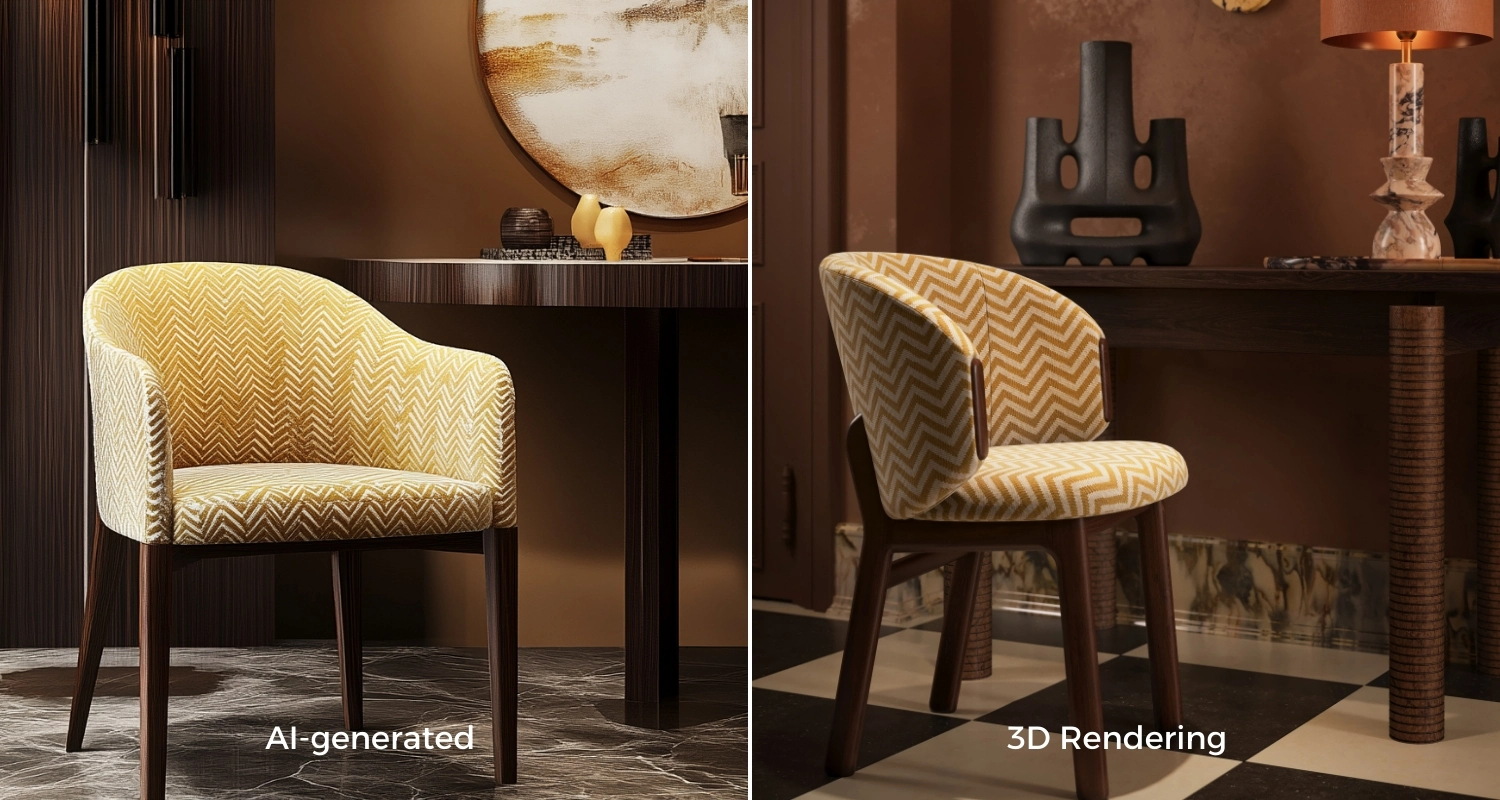
PIXREADY collaborated with a leading outdoor furniture brand to create realistic 3D visuals of a handcrafted, modern one-seater chair. Featuring a woven backrest and seat made of natural fibers, the chair exudes a relaxed, tropical aesthetic. Our team highlighted its unique texture, elegant wooden frame, and high-end craftsmanship through detailed renders and lifestyle scenes set by a pool. These photorealistic visuals allowed buyers to appreciate the design as if seeing it in person.
Result
A smoother launch, reduced need for traditional photography, faster time to market, and visuals that inspired customer trust and increased online conversions.

Conclusion
While AI product renders are useful for experimentation and speed, serious manufacturers still need 3D rendering for quality, consistency, and control. Artificial intelligence captures a glance, but 3D holds a gaze. At PIXREADY, we don’t just visualize —we help you tell a story that sells. We deliver quality that drives lasting value.
Ready to elevate your product visuals? Contact PIXREADY for premium, photorealistic rendering services.
Get 3d expert on your side
More than a 3D rendering vendor, PIXREADY acts as a strategic CGI partner helping brands
сreate scalable visual content for marketing, sales, and product launches. Let's explore your
project and discuss how CGI can support your business goals!
.png)
Founded by a group of technology, architecture, and design professionals in 2018, PIXREADY is one of the challengers empowering the 3D visualization industry and making its products and services more affordable.We are determined to assist businesses around the world to create photorealistic images of their products and ideas and enrich the experience of their clients. We focus on the details, with the highest precision in every pixel.

-2.webp)